Our Sydney terrace has a courtyard that’s 3.2m by 4m — barely bigger than a double garage, and for the first year we owned the house, it was where the bins lived and nothing else. It gets decent morning light but goes into shade by early afternoon thanks to a two-storey wall on the western side. Here’s what actually worked to turn it into a space we use most evenings.
If you’re working with a larger outdoor space, our backyard landscaping ideas for Australian homes covers the full-yard approach — this guide focuses specifically on courtyards under about 20 square metres.
01.Why Go Vertical Before You Go Wide?
The floor space in a small courtyard is too valuable to give up to plants that could just as easily live on a wall. Trailing plants like Wandering Jew and native violet fill it in within a few months.
What to buy: Bunnings and Kmart both stock felt-pocket vertical planters from $35–$150 depending on size. For a more permanent option, a timber batten trellis with wire supports ($90–$180 in materials) handles heavier climbing plants like star jasmine.
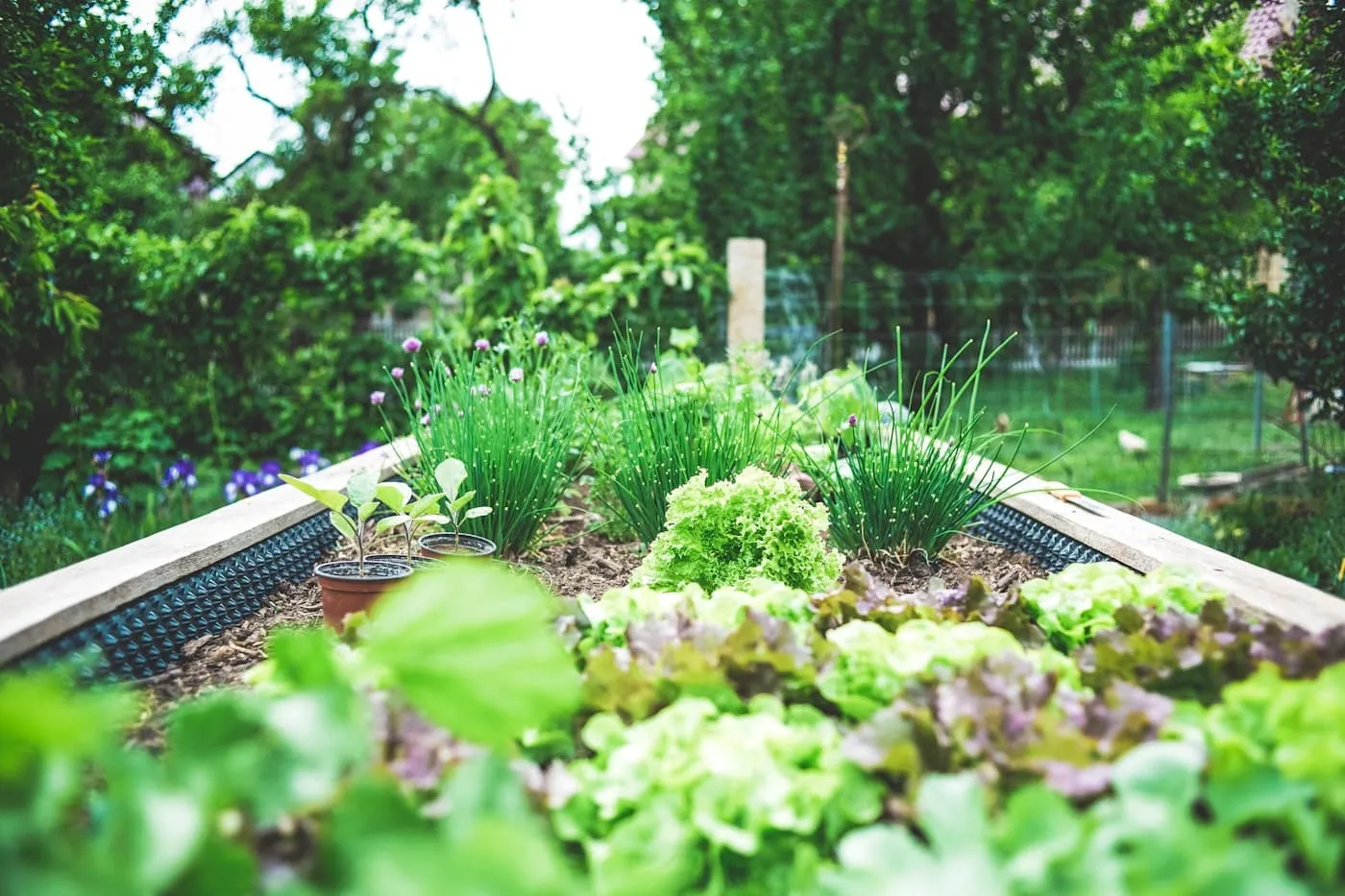
02.Why Use Raised Beds Instead of Fighting the Existing Soil?
Terrace house courtyards often sit on compacted fill or old paving with poor drainage underneath. Good drainage, no backbreaking soil prep, and the height means less bending to garden.
Sizing rule: In a courtyard under 15sqm, keep raised beds to no more than 30% of the floor area — enough for real planting without eating the whole usable space.
03.Why Choose a Pale, Light-Reflecting Ground Surface?
Resurfacing with pale limestone-look pavers (Bunnings, $42/sqm) made a genuine difference — the same amount of light bounces around the space and it reads brighter, even without more sun actually reaching it.
Budget alternative: A layer of crushed white gravel or oyster shell over existing concrete ($8–$15 per 20kg bag) achieves a similar lightening effect for a fraction of the cost, no demolition required.
04.Why Pick One Feature Tree Instead of a Dozen Small Pots?
Replacing them with one large specimen — a potted Tuckeroo (Cupaniopsis anacardioides, $220 from a local native nursery) in a 60cm glazed pot — did more for the space than all eight pots combined. It gives the eye one clear focal point instead of visual noise.
Good options for Australian courtyards: Tuckeroo, Lilly Pilly (standard form), and Japanese Maple all handle large pot culture well and stay manageable in a confined space.
05.Should You Add a Mirror or Reflective Wall Panel?
This sounds like a gimmick until you try it. Position it to reflect greenery rather than a blank wall — the effect is what sells the trick.
Placement tip: Mount at a slight downward angle so it reflects planting rather than the sky, which reads more naturally.
06.How Do You Layer Lighting for Evening Use?
A small courtyard with no lighting plan goes unused after dark, which in Australian summer is when it’s actually pleasant to be outside. Total spend under $80, and it’s the reason we now sit out there most evenings.
07.Should You Use a Fold-Down or Wall-Mounted Table?
Floor space is the scarcest resource in a small courtyard, so furniture that disappears when not in use matters. A wall-mounted fold-down table (IKEA-style bracket table, roughly $89–$140 depending on size) against the boundary wall gives us a dining surface for two without permanently occupying the space.
For entertaining more than two: A round bistro table with nesting stools tucks away more compactly than a rectangular set — worth the trade-off in a courtyard under 12sqm.
08.Should You Add a Small Water Feature for Sound?
Courtyards, especially in inner-city terraces, often back onto neighbours or a lane, and street noise carries. A small self-contained water feature (Bunnings, $99–$180 for a ceramic bubbling urn style) adds enough ambient sound to soften that without needing a full pond installation. No plumbing required — most are self-recirculating.
09.Why Choose Pots in a Limited Colour Palette?
Matching or coordinated pots make even a mismatched plant collection look pulled together. We settled on charcoal and unglazed terracotta only — no other colours allowed in. Kmart’s Elements pot range ($15–$45) and Bunnings’ basic terracotta line ($8–$28) cover most of what we needed within that palette.
10.Should You Install a Retractable Shade Sail?
Afternoon sun on the paved section made the courtyard unusable between 1pm and 4pm in summer, even with limited direct light elsewhere in the yard. A single triangular shade sail (Bunnings, $89 for a 3.6m sail plus $40 in mounting hardware) fixed to the house and the boundary fence solved it without a permanent structure.
11.Why Use Espaliered Plants Against Boundary Walls?
Espaliered fruit trees or climbers trained flat against a wall take up almost no floor depth while still giving you real greenery height. We espaliered a dwarf lemon tree against the sunniest wall ($65 from a local nursery plus wire and vine eyes, $35) and it now produces fruit while barely projecting 15cm from the wall.
12.How Do You Define Zones with Different Textures, Not Walls?
In a space this small, actual dividers eat too much room. Instead, we changed textures to signal different zones — pavers for the dining area, a gravel strip for the planted section, and a small timber deck tile pad for a reading chair. No physical barriers, but the eye reads it as three distinct areas.
13.How Do You Handle Drainage in a Paved Courtyard?
Drainage is the hidden problem in most Australian courtyard gardens, especially in older terrace houses where the entire floor is paved and slopes toward the house rather than away from it. Standing water after a summer downpour kills plants in pots, stains pavers, and creates a mosquito breeding ground within days.
Check the slope first. Pour a bucket of water in the centre of the courtyard and watch where it runs. If it pools against the house wall or sits in the middle, you have a grading issue that needs solving before you plant anything.
- Regrade with gravel. A 30–50mm layer of compacted gravel over existing pavers, sloped gently toward a drain point, costs $150–$300 AUD in materials and fixes most surface pooling without demolishing anything.
- Add a strip drain. A 100mm channel drain along the house wall (Bunnings, $45–$90 per metre) catches runoff before it reaches the foundation. This is the standard fix for terrace courtyards in Sydney and Melbourne’s inner suburbs.
- Raise everything off the ground. Pot feet ($8–$15 for a pack of four at Bunnings) lift planters 20–30mm off the pavers, preventing root rot from sitting water and letting air circulate underneath.
If your courtyard floods regularly after heavy rain, get a plumber to check that the existing floor drain isn’t blocked with leaf debris or old mortar — a $150 service call often solves what looks like a major structural problem.
14.Which Plants Work Best by Australian Climate Zone?
Not every courtyard plant suits every Australian city. Summer humidity in Brisbane kills plants that thrive in Melbourne’s dry heat, and Perth’s sandy soils drain differently from Sydney’s clay.
Sydney and Melbourne (temperate): Lomandra, Clivia, Japanese Maple, star jasmine, Birds Nest Fern. These handle the cool winters and warm summers without fuss. Dwarf Lilly Pilly works as a hedging screen in larger pots.
Brisbane and the Gold Coast (subtropical): Bromeliads, Philodendron, Calathea, and golden cane palm handle the humidity. Avoid silver-leafed plants like lamb’s ear — they rot in subtropical moisture. A potted frangipani adds height and fragrance without taking floor space.
Perth (Mediterranean): Succulents, native grasses like Lomandra and Dianella, rosemary, and olive trees in large pots all handle Perth’s dry summers and sandy drainage. Drip irrigation on a timer ($40–$80 setup from Bunnings) is close to essential here — hand watering in 40°C heat is a chore that gets skipped.
Adelaide (dry warm): Similar to Perth but with slightly more winter rain. Lavender, native violet as groundcover, and Tuckeroo all perform well. Adelaide’s clay soils mean raised beds drain better than in-ground planting in most courtyard situations.
For a deeper dive into native species that suit small gardens, see our native garden ideas for Australian backyards.
15.A Simple Maintenance Calendar
A courtyard garden under 20 square metres takes roughly 30 minutes a week once established. Here’s what to do each season:
Spring (September–November): Repot anything that’s root-bound — if roots are circling the bottom of the pot, go one size up. Feed everything with a slow-release fertiliser (Osmocote, $15–$22 for 500g at Bunnings). Check the irrigation timer if you have one.
Summer (December–February): Water deeply every 2–3 days rather than lightly every day — deep watering encourages roots to grow down rather than staying on the surface. Move shade-loving plants out of direct afternoon sun if they’re scorching. Empty saucers after rain to prevent mosquitoes.
Autumn (March–May): Cut back any overgrown climbers on the trellis before winter. Mulch the top of every pot with 30–50mm of sugar cane mulch ($8–$12 per bag) to retain moisture through the cooler months. Plant winter herbs like parsley and coriander.
Winter (June–August): Reduce watering — most courtyard plants need half as much water in winter. Move frost-sensitive pots (frangipani, tropical ferns) against the warmest wall, usually the one facing north or protected by the house. Clean and oil any timber furniture or planters.
16.What Can Renters Actually Do in a Courtyard?
Most of the 12 tips above work for renters without needing any permission at all. A few require a conversation with your landlord first.
No permission needed:
- Vertical felt-pocket planters (removable, no wall fixings required if freestanding)
- Pot gardens of any size
- Gravel over existing paving (removable at end of tenancy)
- Shade sail if it ties to existing attachment points (fence posts, existing hooks)
- String lighting with outdoor-rated hooks or freestanding stands
- Fold-away or freestanding furniture
- Water features that are self-contained and plug into a power point
Ask the landlord first:
- Any wall-mounted fixings for vertical planters, mirrors or trellises — most landlords in Australian capital cities agree if you offer to patch the holes at the end
- Resurfacing pavers or adding deck tiles over existing concrete
- Installing a permanent pergola or shade structure
- Strip drains or drainage regrading (this is usually a landlord responsibility if the drainage is genuinely faulty)
The practical upshot: a full pot garden, vertical planters on freestanding frames, string lights, gravel over the existing surface, and a shade sail tied to fence posts gets you 80% of the look without a single wall fixing. It’s also how most terrace courtyards in inner-city Sydney and Melbourne are done — because the tenancy runs three years and the landlord isn’t available to consult every weekend.
17.How Do You Make a Courtyard Feel Like a Room?
The courtyards that actually get used daily treat the space like an outdoor room rather than a garden with a chair in it. Three elements make the difference:
A defined floor. Whether it’s pale pavers, timber deck tiles, or gravel over concrete, a consistent ground surface reads as “room” rather than “yard.” Mixing too many surface materials in a space under 15 square metres creates visual clutter instead of zones.
A ceiling element. Even a partial overhead — a shade sail, a trained vine on overhead wires, or a single large umbrella — creates the psychological sense of enclosure that makes people sit down and stay. Without it, a courtyard feels exposed and temporary.
An anchor piece. One piece of furniture or one feature that the space is clearly arranged around — a small bistro table, a daybed, a water feature. Everything else in the courtyard should relate to that anchor rather than competing with it.
This room-like approach works especially well if your courtyard connects to an indoor living space. Keep the interior and courtyard at a similar visual weight — matching the pot colours to indoor accessories, or running the same flooring tone outside — and the courtyard reads as an extension of the house rather than a separate space.
If you’re working with a balcony rather than a courtyard, many of the same principles apply at an even smaller scale — see our small balcony ideas for Australian homes.
18.Start Here: Priority Order
| Priority | Action | Approx. Cost |
|---|---|---|
| 1 | Resurface or lighten the existing ground with pale pavers or gravel | ~$8–$42/sqm |
| 2 | Install vertical planters and one feature tree | ~$300–$500 AUD |
| 3 | Add raised beds if soil/drainage is poor | ~$250–$400 AUD |
| 4 | Set up compact, wall-mounted or fold-away furniture | ~$100–$250 AUD |
| 5 | Add festoon lighting and a mirror for depth | ~$150–$250 AUD |
19.Frequently Asked Questions
19.1How do I design a small courtyard garden in Australia on a budget?
Start with the three cheapest high-impact changes: lighten the ground surface with crushed white gravel or oyster shell over existing pavers ($8–$15 per 20kg bag from Bunnings), add vertical felt-pocket planters on a freestanding frame ($35–$150) to free up floor space for seating, and install festoon string lighting ($30–$80) for evening use. A modest courtyard refresh using pots, plants, vertical planters, and lighting typically runs $400–$900 AUD total. Skip resurfacing and permanent structures unless the budget stretches past $3,000 — pot gardens and vertical greening deliver the best value per dollar in a small space.
19.2What plants are best for small Australian courtyards?
Native shade-tolerant plants like Lomandra, Clivia, and Birds Nest Fern handle the low light common in terrace-house courtyards across Sydney and Melbourne. In Brisbane and the Gold Coast, bromeliads and golden cane palm thrive in the humidity. For a sunny courtyard wall, espaliered dwarf citrus or star jasmine trained on a wire trellis adds greenery without taking floor space. Stick to a maximum of three plant varieties and repeat them for a cohesive look — one of everything reads as cluttered rather than designed.
Related reading: