If you’re looking for outdoor planting ideas to complement your indoor greenery, our backyard landscaping ideas for Australian homes covers native garden design and coastal planting.
Many people struggle with indoor plants. Cacti get overwatered, ferns drown, and even a Pothos, allegedly unkillable, can turn yellow within weeks. The key is knowing which plants genuinely belong in a humid, high-light, salt-adjacent home, and which ones look good on Instagram and die on your windowsill within a month. That means most of us are dealing with a version of the same indoor plant challenge: warm temperatures, high humidity, fluctuating coastal breezes, and strong seasonal light.

Key Takeaways
- Zanzibar Gem, Pothos, and Peace Lily are the three most forgiving choices for coastal homes.
- Salt air requires monthly leaf-wiping and careful window placement.
- Grouping plants at different heights creates a lush, layered look for minimal cost.
- Most of the plants on this list cost ~$15-$60 AUD from Bunnings or a local nursery.
01.Why Do Coastal Homes Need a Different Approach to Indoor Plants?
Plant selection in a coastal home needs to account for all four of these factors together, not just one.
Coastal homes are not the same environment as suburban inland homes. The humidity is higher, particularly in Queensland, northern NSW, and WA coastal zones. The light is stronger and comes from more angles if you’re near the water. Salt air enters through windows and accumulates on leaf surfaces. And the temperature rarely drops low enough to stress tropical plants, which is actually an advantage.
The plants that suffer indoors at the coast are those that need dry conditions: most succulents, cacti, and Mediterranean herbs. They rot, they get fungal issues, and they look miserable. The plants that thrive are tropical species that came from warm, humid forest environments: ferns, Pothos, Philodendrons, Peace Lilies, and palms.
Key point: Matching plant species to your specific coastal microclimate is more important than pot style or placement. Get the species right first, then style around them.
02.Why Is the Zanzibar Gem (ZZ Plant) So Forgiving for Coastal Homes?
This is the plant to recommend to anyone who has killed an indoor plant and given up. It copes with spots ranging from a north-facing window to a dim interior corner, irregular watering and a couple of weeks of neglect. It is one of the toughest plants for the conditions of a coastal Queensland home.
The ZZ Plant (Zamioculcas zamiifolia) stores water in its thick underground rhizomes, which means it’s adapted to boom-and-bust water availability. In the higher humidity of a coastal home, it rarely needs more than a fortnightly water. It tolerates low light, tolerates indirect bright light, and doesn’t care about salt air at all.
Its glossy, deep green leaves work well in coastal interiors because they contrast with the whites, linens, and natural textures that define the style without clashing with the palette.
Key point: ZZ Plants cost ~$15-$45 AUD at Bunnings depending on size. A 20cm specimen in a terracotta pot is the ideal starting size for a shelf or side table.
03.Why Is Pothos (Devil’s Ivy) Best for Trailing and Shelving?
Pothos (Epipremnum aureum) is one of the most widely grown indoor plants in Australia for good reason. It grows fast, handles low light and bright indirect light equally well, tolerates inconsistent watering, and produces long trailing stems that look spectacular on a high shelf or hanging planter.
Golden Pothos grows happily on top of kitchen shelving, with trailing stems that can reach almost to the floor. Water it roughly every 10 days, or when the top of the soil feels dry. In coastal humidity it grows noticeably faster than it does further inland.
The most readily available Pothos varieties in Australia:
- Golden Pothos — yellow-green variegated, the most common and most forgiving.
- Marble Queen — white and green variegation, slightly slower growing.
- Neon Pothos — bright lime-green, striking in a coastal room with natural fibre and white.
Key point: Pothos cuttings from a friend or neighbour cost nothing. Plants from Bunnings start from ~$8-$20 AUD, or from IKEA AU from ~$5-$10 AUD for small specimens.
04.Why Is Peace Lily the Best Blooming Plant for Humid Coastal Rooms?
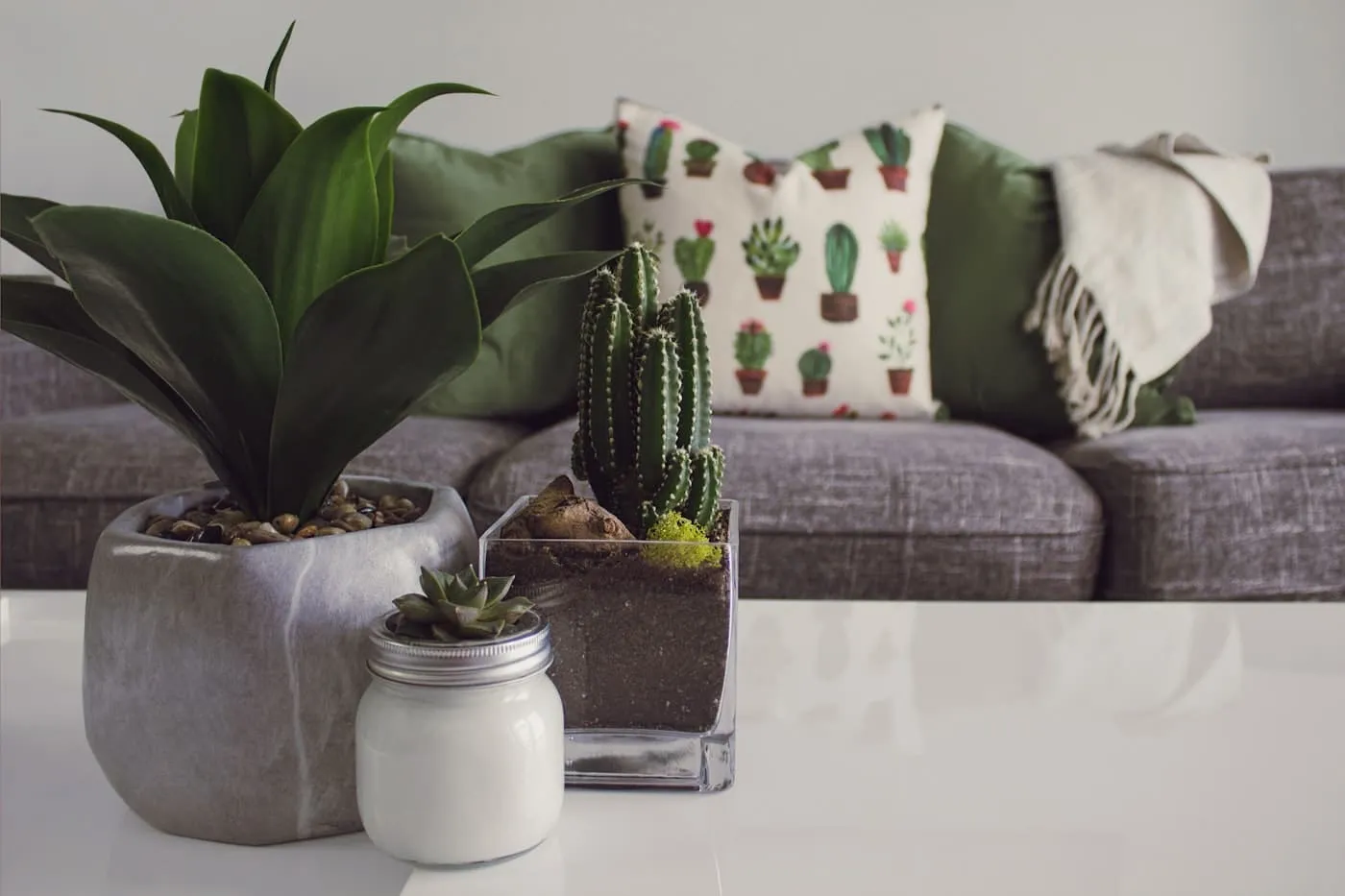
The Peace Lily (Spathiphyllum wallisii) is one of the few indoor plants that flowers reliably in Australian coastal home conditions. It produces elegant white spathe flowers against deep green glossy leaves, and those white tones integrate beautifully into the white-and-natural palette of most coastal interiors.
Peace Lilies prefer shade to indirect light, which makes them excellent for interior rooms, bathrooms, and spaces without direct sun access. They actively benefit from coastal humidity and will show stress through drooping leaves when they need water — a clear and reliable signal that most other plants don’t give you.
Key point: Peace Lilies cost ~$15-$35 AUD at Bunnings or Flower Power (NSW). They are among the best-value flowering indoor plants available in Australia.
05.Why Is Bird of Paradise the Statement Plant for Coastal Rooms?
If you want one plant that makes a room look designed rather than decorated, the Bird of Paradise (Strelitzia reginae or Strelitzia nicolai) is it. The large, glossy, paddle-shaped leaves bring a tropical quality that is unmistakably right for an Australian coastal home. A single large specimen in a terracotta pot in a bright corner can anchor an entire living room.
Bird of Paradise plants need bright indirect light to thrive indoors. A spot within 2 metres of a north or east-facing window works well in most Australian coastal homes. They like warmth and tolerate coastal humidity, which means they’re better suited to Queensland and northern coastal conditions than to Melbourne or southern Tasmanian homes.
Strelitzia nicolai suits the corner of a living room beside a north-facing window. In good light it can grow tens of centimetres a year. The leaves occasionally get a slight brown edge from a ceiling fan, but a monthly wipe with a damp cloth keeps them looking clean.
Key point: A large Bird of Paradise in a statement pot from Temple & Webster or Flower Power costs ~$60-$180 AUD depending on specimen size.
06.Why Is Heartleaf Philodendron Best for Low-Light Coastal Interiors?
The Heartleaf Philodendron (Philodendron hederaceum) is the plant for every dark corner. It trails like Pothos, tolerates low light better than most indoor plants, and has a softer, more heart-shaped leaf that brings a different texture to a plant collection.
In coastal humidity, Philodendrons grow fast. They also propagate incredibly easily: snip a stem below a node, place it in water on a windowsill, and you have a rooted cutting within 2-3 weeks.
Heartleaf Philodendron is easy to propagate: cuttings root in tap water within a few weeks, so one plant (roughly $18 AUD from Bunnings) can become several for the cost of a few small pots (around $3 AUD each from Kmart).
Key point: Heartleaf Philodendron costs ~$12-$25 AUD at Bunnings or local nurseries, and propagates freely from cuttings at no additional cost.
07.Why Choose a Rubber Plant for Bold Coastal Foliage?
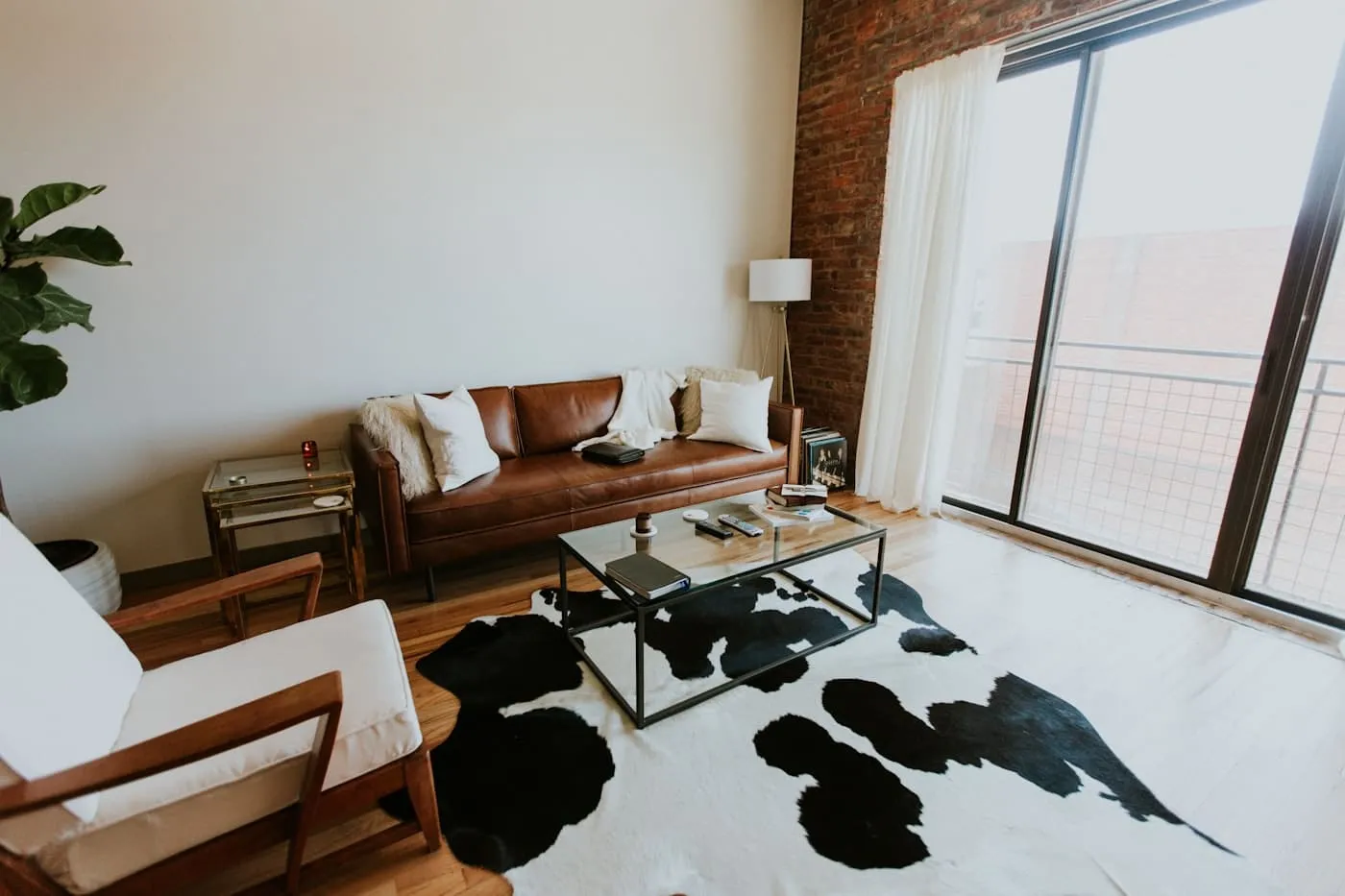
The Rubber Plant (Ficus elastica) offers something different from the softer, trailing plants on this list: bold, upright structure with large, waxy leaves in deep burgundy, green, or variegated forms. In a coastal room dominated by whites, naturals, and linens, a burgundy Rubber Plant in a white ceramic pot provides dramatic contrast without competing with the palette.
Rubber Plants need bright indirect light to maintain their leaf colour. Insufficient light causes the deep burgundy varieties to revert toward green. They like warmth and tolerate coastal humidity well. Water when the top 3-4cm of soil is dry, which in a coastal home’s humidity might be every 10-14 days.
One practical note: wipe the large leaves monthly with a damp cloth. Dust and salt film accumulate more noticeably on large glossy leaves than on smaller plants, and a dirty Rubber Plant leaf looks dramatically different from a clean one.
Key point: Rubber Plants cost ~$25-$80 AUD at Bunnings, Flower Power, or local nurseries depending on size and variety.
08.Why Is Chain of Hearts the Best Hanging Plant for Coastal Bedrooms?
Chain of Hearts (Ceropegia woodii) is one of the most charming indoor plants available in Australia and consistently undersold in most styling guides. The long, delicate trailing stems carry small heart-shaped leaves in grey-green and purple tones, and the overall effect in a hanging planter is extraordinarily pretty.
It suits coastal bedrooms and bathrooms particularly well because of its compact size, slow growth, and low maintenance requirements. It handles the slightly higher humidity of these rooms well and needs watering only every 2-3 weeks once established.
Chain of Hearts is one of the few trailing plants that genuinely looks better in a small, simple hanging planter than in a large pot. Most trailing plants need scale and volume to look good. Chain of Hearts is the exception: a single modest-sized planter at head height, with stems trailing 30-50cm, creates a more refined and elegant effect than a large cascading display.
Key point: Chain of Hearts costs ~$12-$25 AUD at local nurseries or Bunnings. A simple macrame hanging planter from Temple & Webster costs ~$25-$60 AUD.
09.Why Is Golden Cane Palm the Best Large Plant for a Coastal Living Room?
Nothing says coastal Queensland living room quite like a Golden Cane Palm (Dypsis lutescens) in a large terracotta or woven basket. This palm brings genuine tropical presence — the kind of look that makes a room feel like a luxury beach house rather than a suburban lounge.
Golden Cane Palms need bright indirect light and handle coastal humidity very well. They’re one of the few large indoor plants that grows well in the conditions of an Australian coastal home without demanding specialist care. In a north or east-facing corner with good light, they can grow 20-30cm per year.
Key point: A medium Golden Cane Palm (80-100cm) from Flower Power or a local nursery costs ~$50-$120 AUD. Bunnings carries smaller starter specimens from ~$25-$45 AUD.
10.Why Is Boston Fern Best for Coastal Bathrooms and Humid Zones?
Ferns and coastal homes have a complicated relationship. Most ferns want high humidity and indirect light — exactly what a coastal bathroom provides, but not what most other rooms in the house offer. The Boston Fern (Nephrolepis exaltata) is the most forgiving of the commonly available ferns in Australian nurseries, and in the right spot, it’s genuinely spectacular.
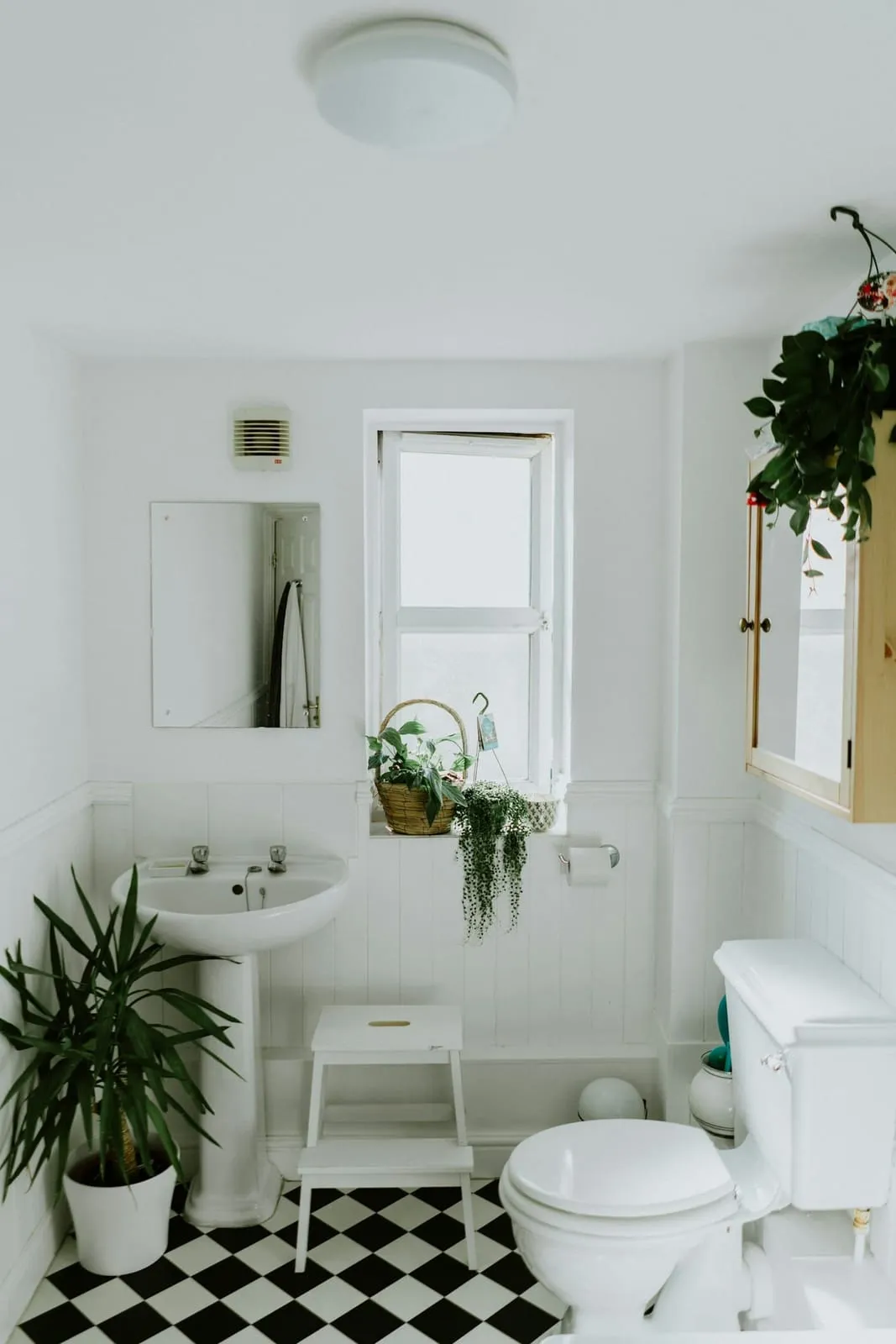
Put a Boston Fern in your bathroom if you have a window. The steam from daily showers provides the humidity it loves, the ambient warmth suits its tropical origins, and the lush, arching fronds add a softness to bathroom styling that no other plant delivers in quite the same way.
Outside the bathroom, Boston Ferns struggle in air-conditioned rooms and anywhere with dry air or direct sun. Know the plant’s limits and work within them rather than trying to make it work in the wrong spot.
If renting, a fern in a hanging basket near the bathroom window requires no wall brackets — a simple tension curtain rod across the window recess can support a small hanging planter with no fixings.
Key point: Boston Ferns cost ~$10-$30 AUD at Bunnings or Flower Power. A 15cm pot is the right starting size for a bathroom shelf.
11.Why Is Monstera Deliciosa the Most Photogenic Coastal Plant?
The Monstera (Monstera deliciosa) has been the most-photographed indoor plant in Australia for the past decade, and with good reason. Those distinctive split leaves are visually striking in a way that no other common indoor plant matches. In a coastal home with white walls and natural textures, a mature Monstera is extraordinary.
Monsteras need bright indirect light and warm temperatures. They grow substantially faster in Queensland and coastal NSW than in cooler states, and they actively benefit from higher humidity. Water every 7-10 days in summer, less frequently in winter.
One genuine concern: Monsteras grow large. A mature specimen in a good position can reach the ceiling within 3-5 years. Plan the space before you buy, and be prepared to repot annually in the first few years. A moss pole or coconut coir stake will support the stems as the plant grows.
Key point: A small Monstera deliciosa from Bunnings or IKEA AU starts from ~$15-$30 AUD. Larger statement specimens from specialty nurseries cost ~$60-$200 AUD.
12.How Do You Style Indoor Plants in a Coastal Home?
One of the most effective styling approaches is a group of three plants at different heights — a tall floor plant, a medium shelf plant, and a small trailing plant at the lowest level — positioned in the corner of a room where two white walls meet. The triangle of heights creates visual interest and a sense of abundance that individual well-spaced plants can never replicate.
The most common indoor plant styling mistake is placing one plant in a corner and wondering why the room doesn’t look lush. Plants need company and scale to have genuine visual impact.
Coastal home plant styling rules that work:
- Group in odd numbers: Three or five plants together always looks more natural than two or four.
- Vary heights: Use plant stands, shelves, and hanging planters to create a tiered effect.
- Mix textures: Pair a large glossy-leaved plant (Bird of Paradise, Rubber Plant) with a fine-leaved trailing plant (Pothos, Chain of Hearts) and a soft fern or grass.
- Use natural pot materials: Terracotta, woven rattan basket covers, white ceramic, and natural stone all work in a coastal interior. Avoid brightly coloured or patterned pots that compete with the plant.
- Let some plants breathe: Not every surface needs a plant. A few deliberate groupings with clear empty space around them reads more sophisticated than plants on every available surface.
Key point: Plant stands from Kmart start from ~$12-$25 AUD. Rattan plant basket covers from Temple & Webster or Adairs cost ~$20-$60 AUD and transform a plain nursery pot into a styled piece instantly.
13.Start Here: Priority Order
| Priority | Plant | Approx. Cost | Best Spot |
|---|---|---|---|
| 1 | Zanzibar Gem (ZZ Plant) | ~$15-$45 AUD | Any room, low to bright indirect light |
| 2 | Pothos (Golden or Neon) | ~$8-$20 AUD | Shelves, trailing from height |
| 3 | Heartleaf Philodendron | ~$12-$25 AUD | Dark corners, trailing or climbing |
| 4 | Peace Lily | ~$15-$35 AUD | Shaded interior rooms |
| 5 | Bird of Paradise | ~$60-$180 AUD | Bright corner statement plant |
| 6 | Boston Fern | ~$10-$30 AUD | Humid bathroom with window light |
| 7 | Monstera Deliciosa | ~$15-$200 AUD | Bright living room corner |
Related reading: