A native garden is much more than a scrubby patch of gum trees. Australia has a huge range of native plants suited to garden conditions — from lush rainforest ferns to structural coastal banksias to cheerful flowering groundcovers. A native garden that looks tired by midsummer usually has the wrong plants for the soil and no mulch, while a properly planned one can barely need a hose through autumn and winter. This guide covers everything you need: layout, plant selection, mulching, wildlife attraction, and how to sequence the whole project so it actually gets finished.
Key Takeaways
- Over 25,000 native species suit Australian garden conditions (ANPSA) — there is something for every spot and climate.
- Lomandra, Westringia, and Grevillea are the safest starting trio for beginners.
- Curved beds with steel edging cost under ~$150 AUD and instantly lift any backyard.
- Natives attract honeyeaters, butterflies, and skinks with no extra effort once planted.
01.Why Understand Your Soil and Climate Zone Before Buying Plants?
The Australian Native Plant Society (ANPSA) advises that matching native plants to local soil type and climate zone is the single most important factor in establishing a low-maintenance garden. Plants selected for the wrong conditions require up to three times more water and fertiliser than correctly matched species, and still underperform. (ANPSA, 2025)
This sounds obvious, but most beginners skip it entirely. Buying plants from a nursery based on how they look on the shelf, rather than whether they suit your soil and climate, means many of them struggle. The ones researched beforehand thrive.
Before spending anything, find your climate zone on the Bureau of Meteorology’s climate classification map. Then test your soil’s drainage by digging a 30cm hole, filling it with water, and watching how fast it drains. More than 10cm per hour is fast-draining (sandy), less than 1cm per hour is heavy clay. Both have excellent native plant solutions, but you need to know which situation you’re working with.
Key point: Soil testing kits at Bunnings cost ~$15-$25 AUD and can save you hundreds in failed plants.
02.Which Native Plants Work Best as the Structural Layer?
The ANPSA recommends planting natives in a three-tier structure — large background plants, mid-layer shrubs, and low groundcovers — to replicate natural Australian bushland habitats and create self-sustaining, low-input garden ecosystems. This approach also maximises wildlife habitat value compared to monoculture planting. (ANPSA, 2025)
The structural layer is your backbone. These are the plants along boundaries and fences that give your garden height, screening, and year-round form. They need to look good even when nothing is flowering.
Top structural picks for Australian coastal and suburban gardens:
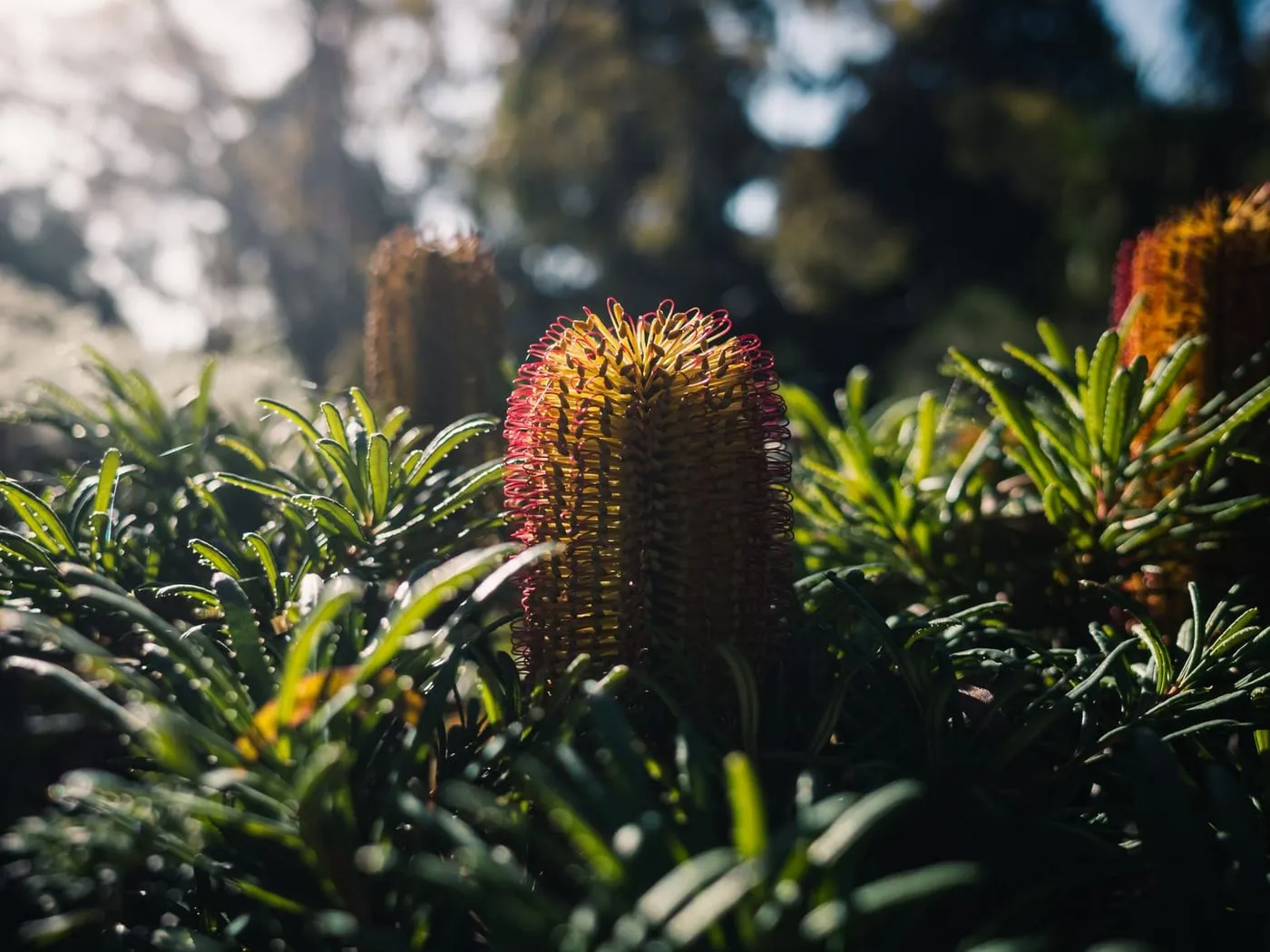
- Coastal Banksia (Banksia integrifolia) — handles coastal salt spray, wind, and sandy soil. Grows to 5-15m but can be kept smaller with light pruning.
- Westringia fruticosa (Coastal Rosemary) — compact, evergreen, flowers nearly year-round. Perfect for low hedging at 1-2m.
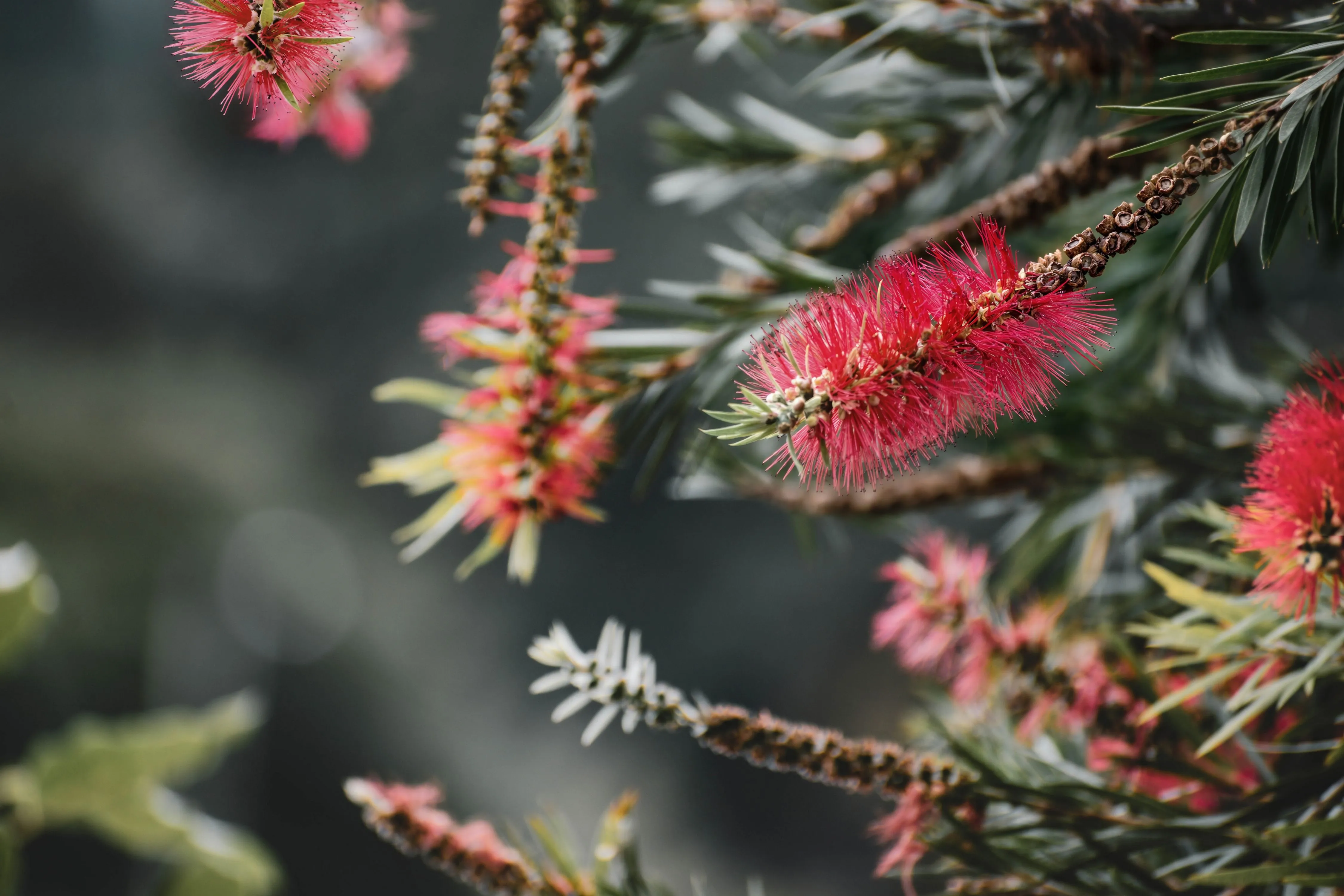
- Callistemon (Bottlebrush) — available in dozens of varieties from 60cm to 4m. Flowers attract honeyeaters reliably.
- Leptospermum (Tea Tree) — fast-growing, excellent as a privacy screen, tough in most conditions.
Key point: Structural native shrubs cost ~$12-$35 AUD each at Bunnings or Garden Express, which ships nationwide with excellent plant condition guarantees.
03.How Do You Choose the Mid-Layer for Colour and Interest?
The mid-layer is where your garden earns its keep visually. These plants sit between knee and shoulder height and deliver most of the flowers, foliage colour, and movement that make a native garden look alive. Pick at least three to four species with staggered flowering seasons so something is always blooming.
A planting of Grevillea ‘Moonlight’, Kangaroo Paw in red and yellow, and a mid-sized Hakea can keep something flowering in every month of the year. Kangaroo Paw is a reliable honeyeater attractor.
Strong mid-layer choices:
- Grevillea — flowering for most of the year, dozens of sizes and forms, highly bird-attracting.
- Kangaroo Paw (Anigozanthos) — iconic Australian look, excellent cut flower, drought-tolerant once established.
- Hakea — structural foliage, interesting seed pods, tough in exposed positions.
- Lomandra longifolia — grass-like texture, tough as old boots, incredibly versatile as a filler.
Key point: Mid-layer natives average ~$8-$20 AUD per plant at most nurseries. Garden Express often sells packs of 5-6 plants for better value.
04.Which Groundcovers Suppress Weeds and Add a Finished Look?
Bare soil between plants is an open invitation for weeds. Native groundcovers solve this beautifully — they’re low, spreading, and suited to Australian conditions in a way that most exotic groundcovers simply aren’t.
Replacing bare soil with native groundcovers can cut weeding time dramatically after one full growing season, and the labour savings alone can justify the cost of the plants.
The most reliable Australian native groundcovers:
- Pigface (Carpobrotus) — bright flowers, extremely drought-tolerant, works well on sandy coastal soils and slopes.
- Myoporum parvifolium — fast-spreading, small white flowers, very drought-hardy once established.
- Native Violet (Viola hederacea) — excellent under trees in part shade, forms a dense carpet.
- Scaevola (Fan Flower) — works well in coastal positions, continuous flowering.
Key point: Native groundcovers cost ~$6-$15 AUD each and typically spread 50-150cm, so fewer plants than you’d think are needed to cover a bed.
05.How Do You Create Curved Garden Beds That Look Intentional?
Straight garden beds are easier to install, but curved beds look more natural and considered in an Australian garden context. They soften hard fence lines and give the impression that the planting grew there organically, rather than being planted in rows on a Saturday afternoon.
Lay a garden hose on the ground and adjust the curve until you’re happy with the shape. Live with it for a day before digging. What looks good standing up sometimes looks off once you step back. Once you’re satisfied, mark the edge with spray paint and start digging.
After shaping, install steel garden edging along the curve. This keeps mulch and soil within the bed and creates a clean boundary with the lawn or path. Corten steel edging has a warm, rusty tone that suits coastal and bushland-style gardens particularly well.
Key point: Steel garden edging from Bunnings costs ~$15-$25 AUD per 5m length. A standard backyard fence-line bed typically needs 2-3 lengths, making the total edging cost under ~$75 AUD.
If renting, portable alternatives include timber sleeper-edged raised planter boxes on castors, which can be moved at lease end without affecting the property.
06.Why Is Mulching the Most Underrated Native Garden Step?
Mulch also moderates soil temperature and progressively improves soil structure as it breaks down. (ANPSA, 2025)
Mulch is the single action with the highest return per dollar in a native garden. It does more work than almost any other product you can apply, yet it’s consistently the last thing people budget for.
Use a native-appropriate mulch: bushchip, eucalyptus bark, or pea gravel. Avoid dyed or composted mulches that can raise soil pH above what most natives prefer. Apply at least 6cm deep, keeping mulch clear of plant stems and trunks to prevent collar rot.
A standard 60L bag of garden mulch from Bunnings covers roughly 1 sqm at 6cm depth. For a 20sqm garden bed, you need about 20 bags, which costs ~$80-$120 AUD. It is one of the best ~$100 you will spend.
Key point: Mulching a 20sqm native bed costs ~$80-$120 AUD and can eliminate the need for summer irrigation entirely in well-established gardens.
07.How Do You Design a Waterwise Garden for Australian Summers?
Water restrictions are a reality in most Australian states. The good news is that a properly designed native garden barely needs watering after its first summer. The goal is to set plants up well in autumn, water them through their first summer, and then withdraw irrigation as roots establish.
For the first season, water new plants deeply twice a week rather than shallowly every day. Deep watering encourages roots to go down into moist soil layers, which builds drought resilience. Shallow watering keeps roots near the surface, making plants permanently dependent on irrigation.
Group plants with similar water needs together. This sounds simple, but it makes a real difference when you’re running a dripper system or hand-watering efficiently. Bunnings stocks a range of drip irrigation kits from ~$30-$120 AUD that can be set up on a timer without any plumbing knowledge.
Key point: A basic drip irrigation timer and drip kit from Bunnings costs ~$60-$120 AUD and can reduce hand-watering time to zero once programmed correctly.
08.How to Attract Birds and Wildlife to Your Native Garden
Habitat gardens also reduce local pest insect populations by encouraging natural predator species. (ANPSA, 2025)
This is one of the most rewarding parts of a native garden and requires almost no extra effort beyond the planting itself. The plants do the work; you just sit and watch.
The essentials for a wildlife-friendly native garden:
- Nectar plants: Grevillea, Banksia, Callistemon, and Melaleuca feed honeyeaters and lorikeets.
- Dense shelter shrubs: Leptospermum and Hakea provide nesting cover for smaller birds.
- A shallow bird bath: 3-5cm of water, positioned where cats cannot approach unseen. Clean it twice a week.
- No pesticides: Insecticides kill the prey that insect-eating birds depend on. If your natives are healthy and well-matched to your soil, pest pressure is minimal anyway.
Once a native garden is established, a range of bird species can visit within the first year, including Eastern Spinebills and Blue-Faced Honeyeaters. A bird bath (Kmart stocks inexpensive ones) will be used every day.
Key point: A terracotta or ceramic bird bath costs ~$25-$80 AUD at Kmart or Temple & Webster and is the simplest single step toward making a native garden a genuine wildlife habitat.
09.Are Native Gardens Suitable for Small Backyards?
Absolutely. The scale of native planting adapts readily to any size space. Small backyards actually benefit more from a native approach because water is scarce in small soil volumes, and natives are far more forgiving of the heat reflected off fences and paving in compact urban spaces.
Most “small garden native plant lists” suggest the same dwarf shrubs in every climate. A more effective approach is to choose one structural statement plant scaled to your boundary height, two mid-layer flowering species with staggered bloom times, and a single groundcover. This three-species rule produces a more cohesive, higher-impact result than filling a small bed with ten different species.
For small courtyard and terrace gardens, focus on:
- Compact Grevillea varieties such as ‘Boongala Spinebill’ or ‘Coastal Gem’ that stay under 1.5m.
- Dwarf Banksia such as Banksia ‘Birthday Candles’ that stays under 60cm.
- Native grasses in pots — Poa, Lomandra ‘Lime Tuff’, or Wallaby Grass work well in large container planters.
If renting, large terracotta or ceramic pots with native grasses and a compact Grevillea create a genuine native garden aesthetic with zero permanent changes to the property.
Key point: A full small courtyard native planting of 8-12 plants in quality pots costs ~$200-$500 AUD and can be taken to the next home at lease end.
10.How Do You Use Rocks and Boulders to Create a Natural Aesthetic?
Rocks are a natural part of the Australian landscape and belong in a native garden. They provide habitat for lizards and skinks, help retain soil moisture, and visually anchor plant groupings in a way that feels genuinely Australian rather than imported.
Use one or two large statement boulders rather than many small stones scattered randomly. A single 40-60kg sandstone or granite boulder costs ~$30-$80 AUD from a landscape supplier and creates far more visual weight than a tray of small decorative rocks. Position boulders two-thirds buried in the soil for a naturalistic look.
Between rocks and around plant bases, use fine gravel or bush pebbles as a mulch alternative in dry, sunny positions. Pebble mulch doesn’t break down like organic mulch, so it’s a one-time installation in hard-to-reach garden corners.
Key point: A 25kg bag of decorative gravel or bush pebbles from Bunnings costs ~$8-$15 AUD and covers roughly 0.5 sqm at 5cm depth.
11.How Do You Maintain a Native Garden Once It’s Established?
The whole point of a native garden is that maintenance drops dramatically after the first 12-18 months. Here’s what “low maintenance” actually looks like in practice.
Annual tasks:
- Top up mulch to 6cm in early autumn
- Light tip pruning after flowering to keep shrubs dense and bushy
- Remove any exotic weed seedlings before they establish (a 2-minute weekly walk-through catches them early)
- Divide and transplant any clumping grasses like Lomandra that outgrow their position
Seasonal tasks:
- Check the bird bath and refill twice a week
- Lightly fertilise with a low-phosphorus native fertiliser in early spring only (too much phosphorus kills most Australian native plants)
- Prune Grevillea and Callistemon lightly after flowering to maintain shape
Low-phosphorus native fertiliser is important. Most standard garden fertilisers are too high in phosphorus for Australian natives. Bunnings stocks native-specific fertiliser from brands like Yates, typically ~$10-$20 AUD per bag.
Key point: Ongoing maintenance for a well-established 30sqm native garden averages under 30 minutes per week across the year, compared to 2-3 hours per week for a comparable exotic garden.
12.How Do You Sequence a Native Garden Project Over Time?
The most sustainable approach is to complete one garden bed per season rather than attempting the whole space at once. This staggers costs, allows you to learn from each bed, and means every planting goes in at the optimal autumn-winter establishment window rather than being rushed in summer.
Most people plan a native garden in full, attempt to install it in a single weekend, run out of energy by mid-afternoon, and end up with half-planted beds that struggle. A staged approach removes all of that pressure.
A practical four-stage sequence:
- Autumn, Year 1: Install the structural layer along the boundary fence line. This gives plants the whole winter to establish roots before their first summer.
- Spring, Year 1: Add the mid-layer flowering shrubs. Mulch everything.
- Autumn, Year 2: Fill in groundcovers and any gaps. Add rocks and boulders. Install irrigation if needed.
- Ongoing: Top up mulch annually, prune after flowering, and enjoy watching the wildlife arrive.
Key point: Buying plants in autumn, before the summer rush, means better selection at nurseries and plants that have had time to acclimatise to Australian conditions at the growing facility.
13.Start Here: Priority Order
| Priority | Action | Approx. Cost |
|---|---|---|
| 1 | Test your soil and identify your climate zone | ~$15-$25 AUD |
| 2 | Install edging and shape garden beds | ~$50-$150 AUD |
| 3 | Plant structural layer along boundary fences | ~$100-$400 AUD |
| 4 | Mulch all beds to 6-8cm depth | ~$80-$200 AUD |
| 5 | Add mid-layer flowering shrubs and groundcovers | ~$100-$300 AUD |
| 6 | Install a bird bath and any drip irrigation | ~$60-$200 AUD |
Related reading: