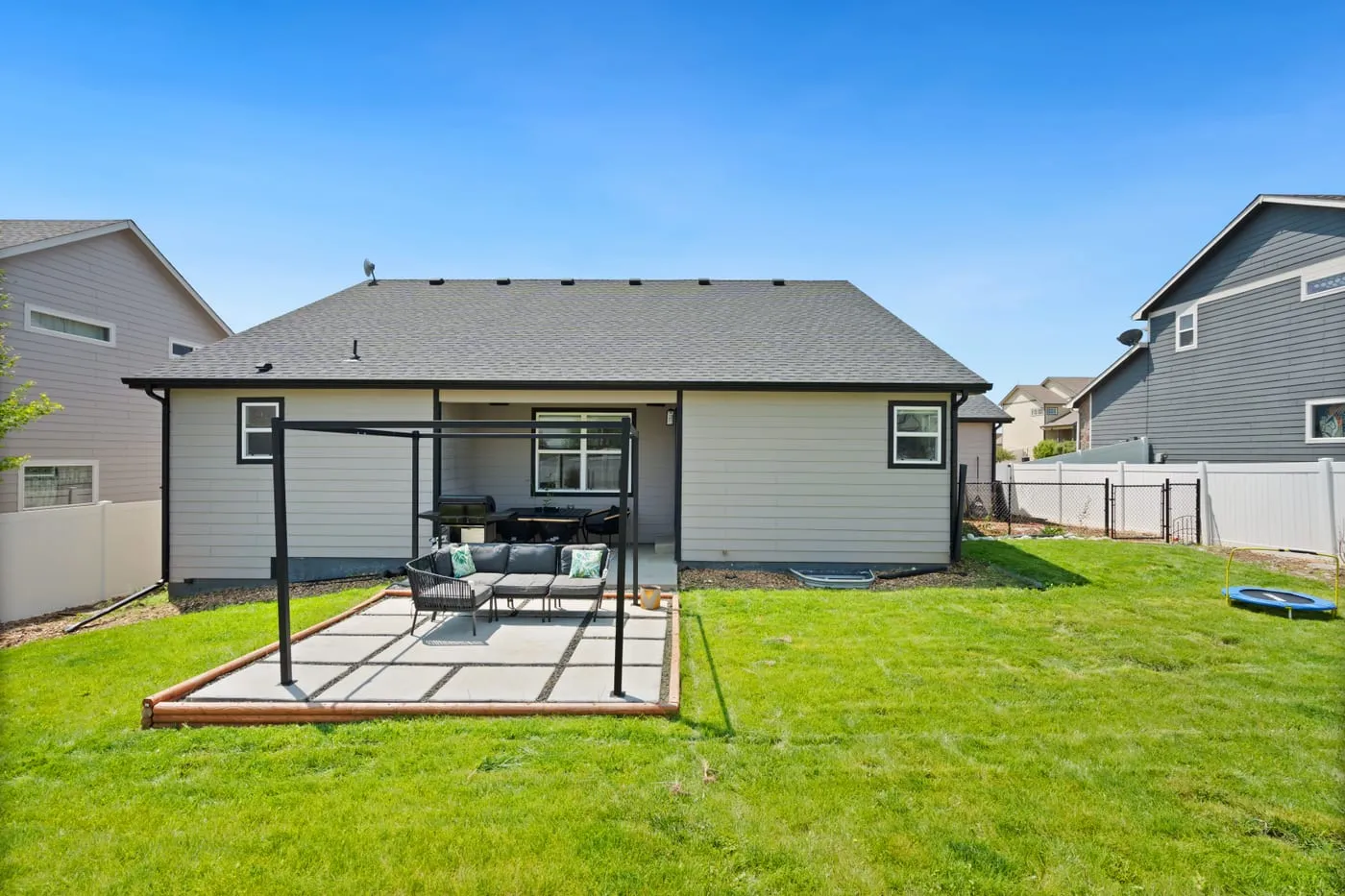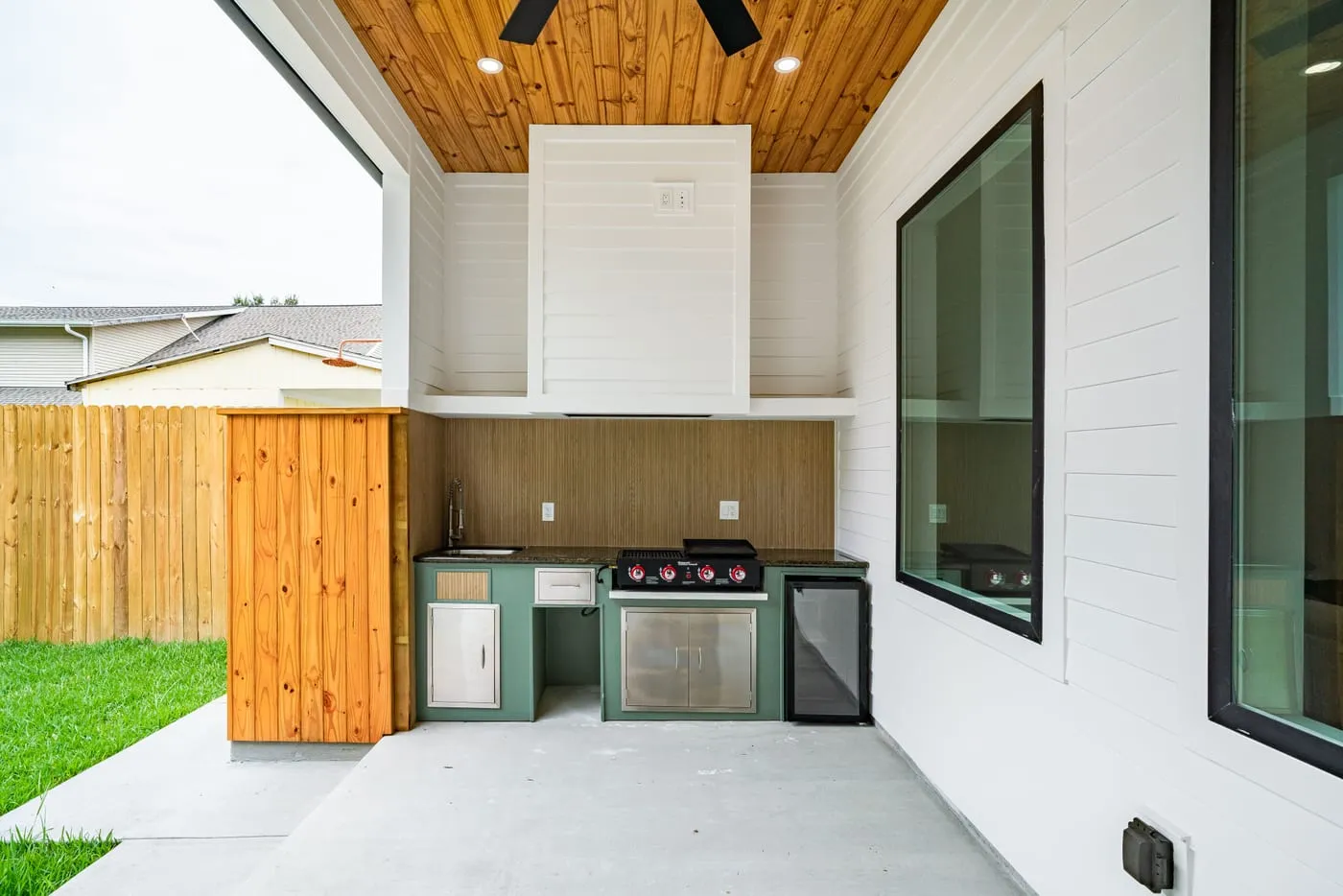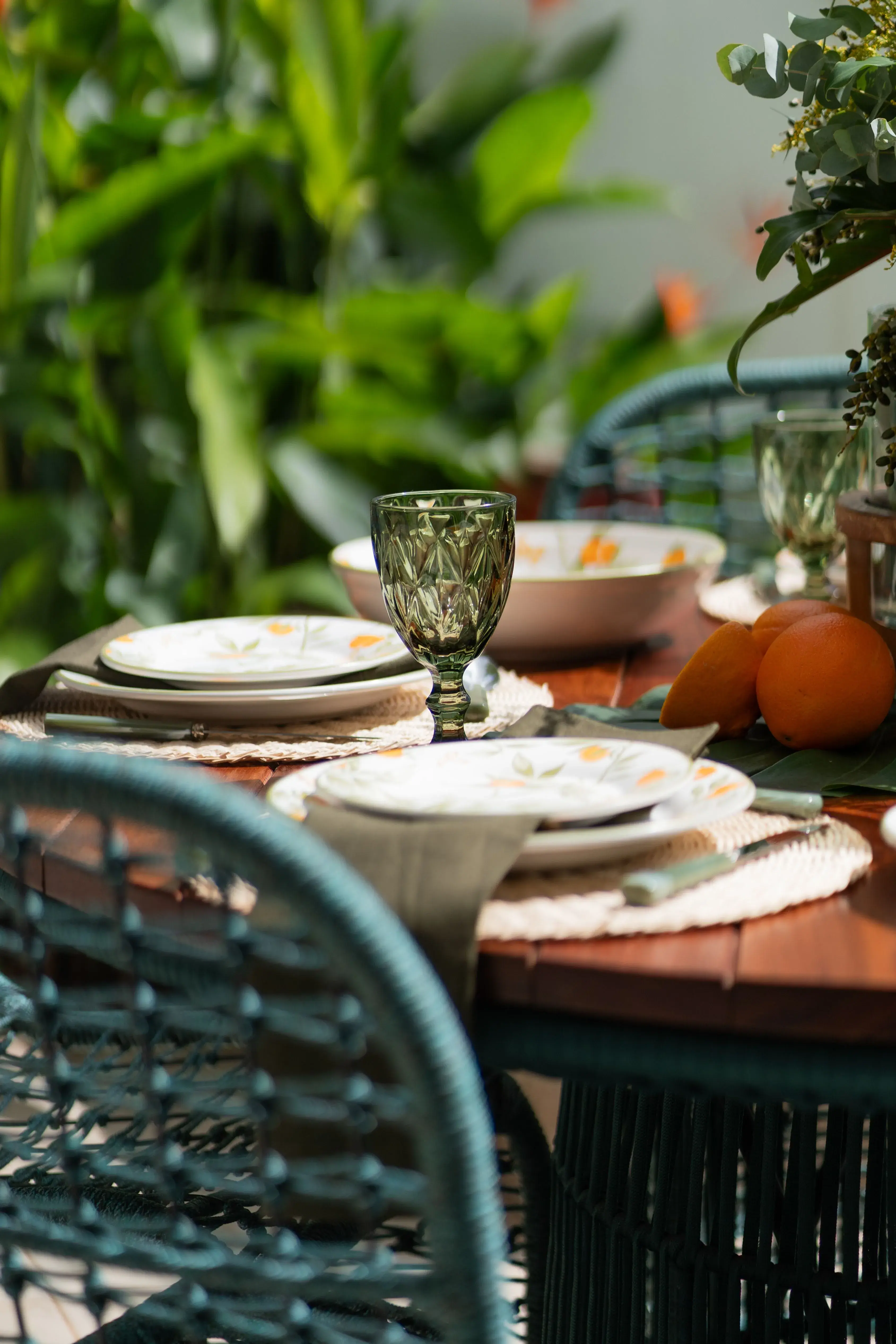
We’ve had an alfresco off the back of our Brisbane house for four years, and it took most of that time to get it from “the patio with a table on it” to a space we genuinely prefer to the dining room. If you’re planning a full outdoor entertaining area — not just dining — our outdoor entertaining ideas guide for Australian homes covers the complete setup from cooking zones to lounge areas.
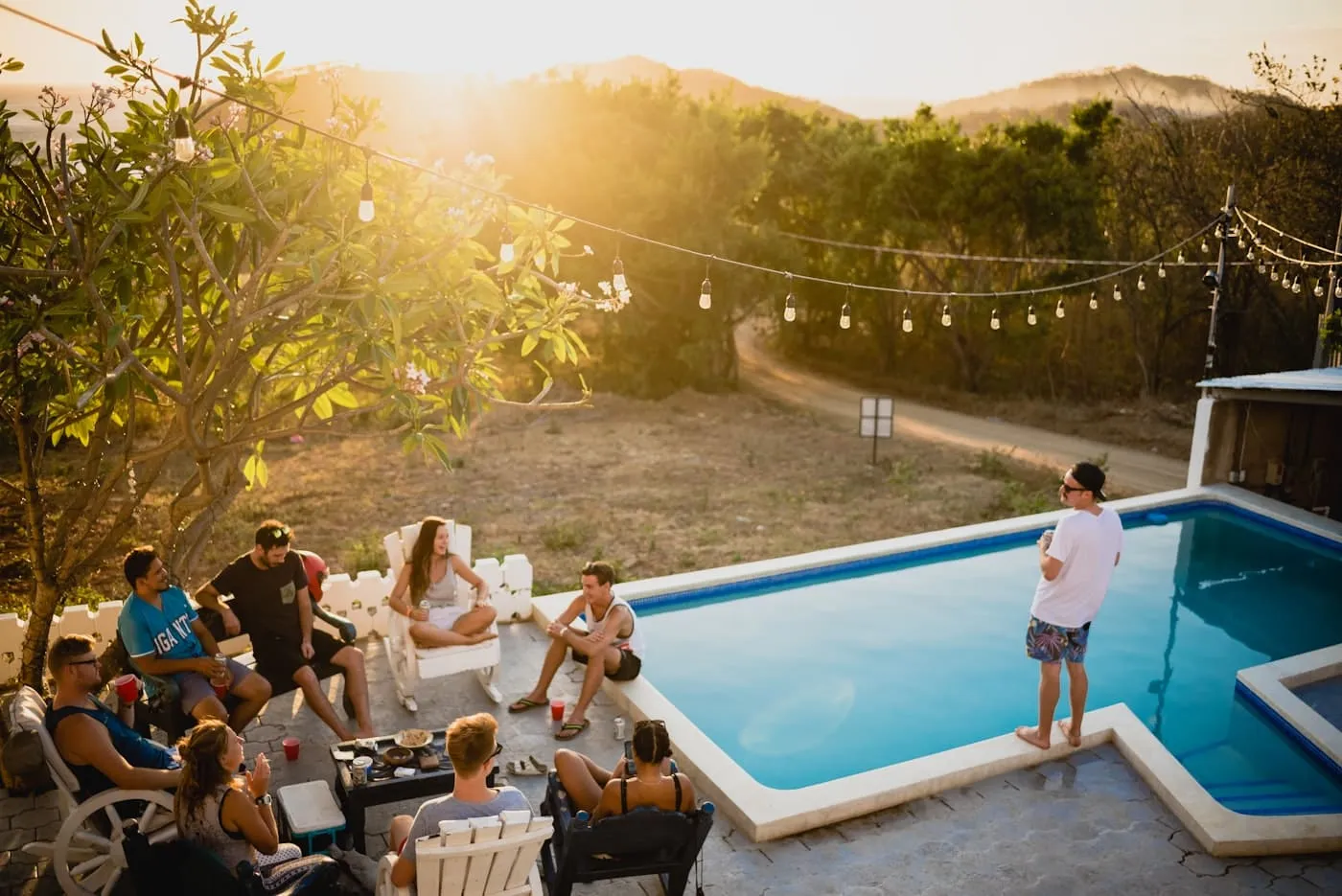
01.Why Cover It, Even Partially?
An uncovered alfresco in most of Australia gets rained out or sunburnt out of commission for a good chunk of the year. If a full roof isn’t in the budget, even a large retractable awning ($800–$2,200 installed) makes a real difference. If you plan to add a roof, check your local council’s approval rules for covering an alfresco first, and budget for what a roofed patio costs per square metre.
02.How Do You Size the Table for Your Actual Gathering Size?
We made the classic mistake of buying a 6-seater for a space that regularly hosts 8–10 for Christmas and birthdays. Rule of thumb: allow 60cm of table length per seated person. For a table that flexes between everyday use and bigger gatherings, an extendable outdoor table (Fenton & Fenton or Early Settler, $899–$1,800) is worth the extra cost over a fixed size.
03.Why Invest in a Proper Outdoor Heater?
Brisbane winters aren’t brutal, but June and July evenings still push people back inside without heat. A freestanding gas patio heater ($249–$450, Bunnings or Barbeques Galore) extended our usable alfresco season by a good two months either side of winter. In cooler states like Victoria or Tasmania, this upgrade matters even more.
Alternative: A built-in fire pit table ($450–$900) does double duty as a heat source and a low coffee table for pre-dinner drinks.
04.Why Choose Furniture Rated for Australian UV and Humidity?
Teak is the other genuinely durable option if you prefer timber.
What to avoid: Untreated timber and basic PVC-strap chairs — both degrade fast under Australian sun exposure.
05.Should You Add a Servery Bench or Bar Zone?
Constantly walking food and drinks from the kitchen breaks up the meal and keeps the host stuck indoors. A serving station near the table makes hosting feel relaxed rather than like a shuttle run.
Budget version: A freestanding outdoor sideboard or bar cart ($250–$600, Temple & Webster) achieves most of the same benefit without the joinery cost.
06.How Do You Get the Lighting Layered, Not Just Functional?
One overhead light does the job but not the mood. We layered ours: a dimmable pendant over the table (Beacon Lighting, $189), festoon lights strung along the roofline ($65, Bunnings), and a couple of low-level lanterns on the servery bench for ambient warmth. Dimming the overhead pendant for dinner and relying on the festoon and lanterns changes the whole feel of the space at night.

07.Why Use an Outdoor Rug to Anchor the Space?
A bare concrete or paved slab under alfresco furniture reads as unfinished no matter how good the furniture is. A large weatherproof outdoor rug (200x290cm, Temple & Webster, $129–$250) under the dining table made ours feel considered rather than like an afterthought extension of the yard.
08.How Do You Solve the Bug Problem Before It Ruins Dinner?
Mosquitoes and flies are the fastest way to send guests back indoors in most of Australia. We run an electric outdoor mozzie diffuser ($25, Mortein Naturgard) plugged in near the alfresco entry, plus citronella candles on the table for evenings. In particularly bad seasons, a standing bug-zapper lantern ($45–$70) as backup earns its keep.
09.Should You Add a Ceiling Fan If the Space Is Covered?
An outdoor-rated ceiling fan (Mercator or Brilliant, $179–$350, professionally installed for $120–$200 labour) dropped the perceived temperature enough that we could use the space through the hottest part of the day, not just evenings.
10.Why Choose a Neutral Palette That Extends the Indoor Living Space?
The alfresco spaces that feel most integrated with the house, rather than bolted on, tend to share a palette with the adjoining indoor room. It reads as one continuous space rather than two disconnected zones.
11.Why Keep a Retractable Screen for Wind and Privacy?
Retractable outdoor blinds in clear PVC or mesh (Bunnings, $180–$380 per drop) block wind without closing off the view, and roll away completely when not needed.
12.Why Add Greenery Inside the Alfresco Zone, Not Just Around It?
Plants placed within the actual dining area — not just around the perimeter — make the space feel like a room rather than a slab with furniture on it.
13.How Do You Plan for Easy Cleanup?
An alfresco that’s a hassle to clean gets used less over time. A small outdoor storage bench ($150–$280) near the entry holds throws and cushions overnight or in bad weather, keeping the space ready to use without a reset each time.
14.Start Here: Priority Order
| Priority | Action | Approx. Cost |
|---|---|---|
| 1 | Add or extend a roof or shade cover | ~$800–$6,000 AUD |
| 2 | Buy the right-sized, weather-rated table setting | ~$900–$1,800 AUD |
| 3 | Add heating for shoulder-season use | ~$249–$900 AUD |
| 4 | Set up a servery zone and layered lighting | ~$250–$1,800 AUD |
| 5 | Finish with a rug, plants, and bug control | ~$150–$400 AUD |
15.What Flooring Works Best Under an Alfresco Dining Table?
The surface under your dining table matters more than most people realise — a wobbly table on uneven pavers or a chair that catches on rough concrete ruins the experience regardless of how good everything else is.
Sealed porcelain or ceramic tile is the most popular choice for Australian alfresco floors. It doesn’t get dangerously slippery when wet (choose textured over polished), resists UV fading, and cleans up after dinner with a hose. Bunnings and Beaumont Tiles stock outdoor-rated tile from $35–$70 per square metre.
Composite decking ($90–$150 per square metre installed) is warmer underfoot than tile and works well in shaded alfresco areas, but it gets hot in direct summer sun — test it barefoot on a 35°C day before committing. Genuine hardwood decking (merbau, spotted gum) looks beautiful but needs oiling every 6–12 months to prevent greying.
Raw concrete is the cheapest option but stains easily from wine and oil spills — a sealed or painted finish ($15–$25 per square metre for a quality concrete sealer) is worth the extra step if concrete is your base.
Avoid outdoor carpet or artificial turf under a dining table — food and drink spills are almost impossible to clean properly, and they become a mould risk in humid climates.
16.How Do You Protect Outdoor Dining Furniture Between Uses?
Even weather-rated furniture degrades faster than it should if it’s left uncovered between uses, especially in coastal areas where salt air accelerates corrosion.
- Fitted furniture covers ($40–$120 AUD for a dining set cover, Bunnings or Amazon AU) are the single most effective protector. Look for covers with air vents to prevent condensation buildup underneath, which causes mould on timber even under a cover.
- Stack and store chairs if your alfresco has a storage bench or shed nearby. Stacking chairs (from $89 each at Temple & Webster) take up a fraction of the space when not in use.
- Wipe down after rain, even under a roof — wind-driven rain and condensation settle on cushions and frames. A quick towel-off after rain prevents the watermarks and mildew that make outdoor furniture look tired within a single season.
17.Lighting an Alfresco Dining Area
Good lighting extends the hours you can use an alfresco space and changes its atmosphere entirely after dark. The best setups layer two types: overhead ambient light and lower accent light.
Festoon lights ($30-$80 AUD for a 10-metre string, Bunnings or Temple & Webster) strung above the dining table are the single most effective alfresco lighting upgrade. Hang them at roughly 2.5-3 metres high, either from the pergola structure or from screw-in hooks on fence posts. Warm white (2700K) gives the best dining atmosphere — avoid cool white, which reads as commercial.
Solar path lights ($20-$50 AUD for a pack of 4-6, Bunnings) placed along the edge of the entertaining area define the space at night and provide enough light to walk safely without overpowering the festoons above. They need no wiring and charge during the day.
Candles in glass hurricanes on the table itself add warmth without competing with the overhead light. Use citronella candles ($8-$15 AUD, Bunnings) during summer months for the added benefit of insect deterrence.
Avoid floodlights pointed at the dining area. They wash out the atmosphere and make the space feel like a car park rather than a place to eat.
For coastal homes specifically, protecting outdoor pieces from salt air exposure deserves its own maintenance routine.
18.How Much Does It Cost to Set Up an Alfresco Dining Area in Australia?
The total cost depends on whether you’re starting from a bare slab or upgrading an existing space. Here’s a realistic breakdown by budget tier:
| Component | Budget option (AUD) | Mid-range (AUD) | Premium (AUD) |
|---|---|---|---|
| Shade cover (awning, sail, or roof) | $89–$250 (shade sail) | $800–$2,200 (retractable awning) | $3,000–$6,000 (insulated patio roof) |
| Dining table + chairs (4–6 seat) | $300–$600 (Bunnings/Kmart) | $900–$1,800 (Early Settler/Temple & Webster) | $2,000–$4,000+ (teak/custom) |
| Outdoor rug (200x290cm) | $80–$150 (Kmart) | $129–$250 (Temple & Webster) | $300–$600 (designer) |
| Heating (patio heater or fire pit) | $100–$249 (electric radiant) | $249–$450 (gas patio heater) | $450–$900 (fire pit table) |
| Lighting (festoon + accent) | $30–$80 (festoons only) | $100–$300 (festoons + pendant) | $300–$600 (full lighting plan) |
| Bug control | $25–$70 | $25–$70 | $25–$70 |
| Outdoor storage bench | $150–$280 | $150–$280 | $150–$280 |
| Total | $774–$1,679 | $2,353–$5,348 | $6,225–$12,550+ |
Most Australian households land in the budget-to-mid-range bracket, spending $1,500–$4,000 AUD on a complete alfresco dining setup. The shade cover and dining set account for roughly 70% of the total cost, so getting those two right is where the budget matters most. If you’re working with a tight courtyard rather than an open patio, our small courtyard garden ideas guide covers compact layouts that maximise a smaller footprint.
19.Frequently Asked Questions
19.1What do you need for an alfresco dining area?
At minimum, you need three things: a weather-rated dining table and chairs sized for your usual gathering (allow 60cm of table length per seated person), some form of overhead shade cover (even a portable shade sail at $89 from Bunnings makes a real difference), and layered lighting for evening use (festoon string lights at $30–$80 are the single most effective upgrade). Beyond those essentials, an outdoor rug anchors the space, a patio heater extends usable months through cooler seasons, and a storage bench keeps cushions and throws protected between uses. Budget roughly $800–$2,000 AUD for a solid starter setup in most Australian climates.
Related reading: