A patio is the hard-surface foundation everything else in a backyard sits on, and it’s worth getting right before choosing furniture or a shade structure. Our outdoor lounge ideas and alfresco dining guides cover what goes on top of a patio — this one covers the surface itself: material, layout, and covered vs open.
Most patio planning mistakes happen before a single paver goes down. Choosing a surface material or a layout shape without first deciding how the space will actually be used, dining, lounging, or both, tends to produce a patio that technically works but never quite fits the furniture people want to put on it.
01.Which Patio Surface Material Is Right for Your Backyard?
Exposed aggregate concrete (~$80-$120 AUD per sqm installed) is the most cost-effective durable surface for most Australian backyards, offering a textured, slip-resistant finish that plain concrete doesn’t. It handles the UV exposure and temperature swings of most Australian climates without cracking or fading as quickly as cheaper alternatives.
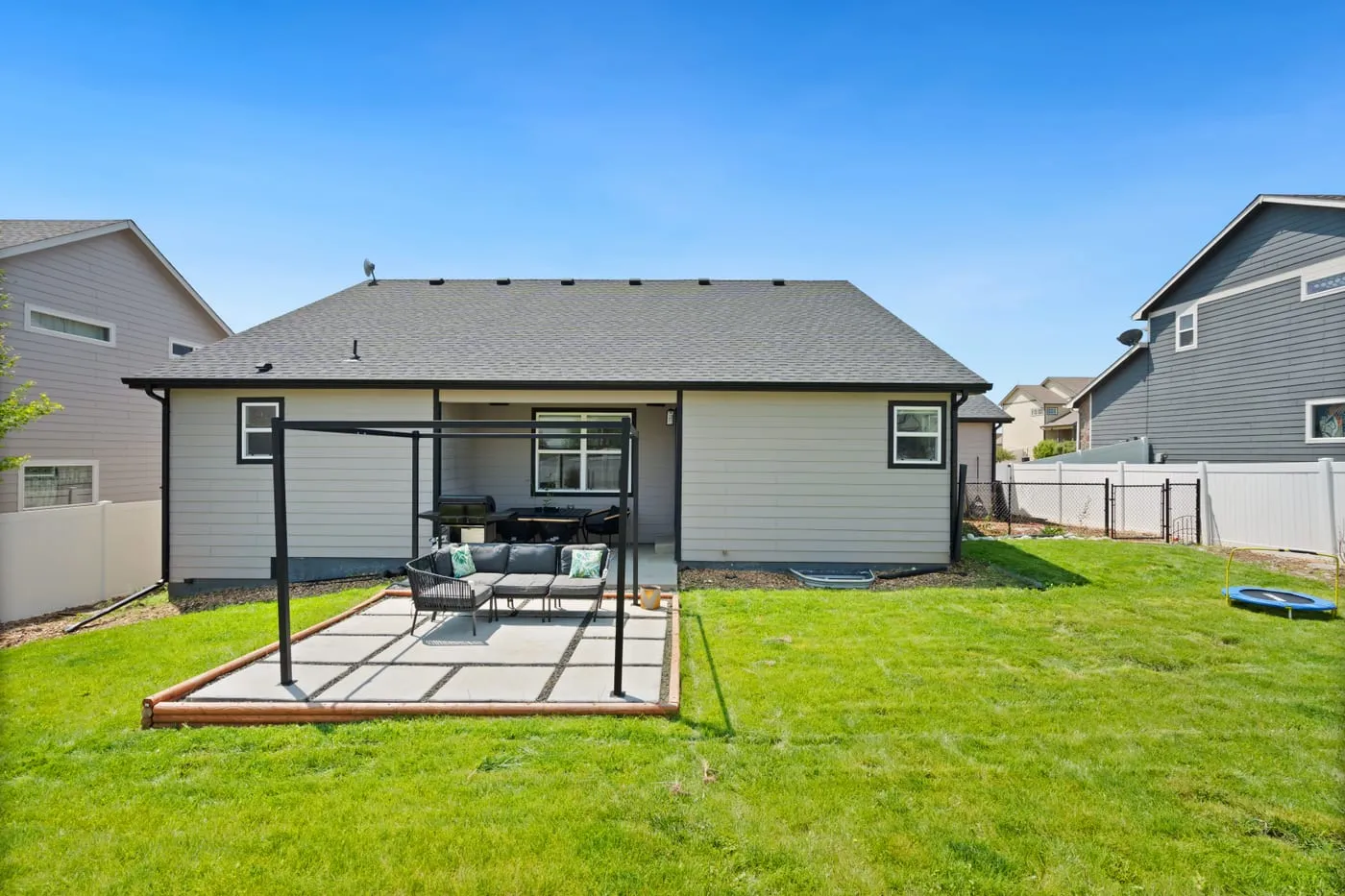
Concrete pavers ($70-$110 AUD per sqm installed) are the next most common choice and give more design flexibility, since individual pavers can be arranged in patterns or replaced individually if one cracks. Natural stone, travertine or sandstone ($150-$280 AUD per sqm installed), costs considerably more but ages better than concrete and suits a coastal or Hamptons-style backyard particularly well.
Surface options by budget:
| Material | Cost per sqm (installed) | Best for |
|---|---|---|
| Broom-finished concrete | $60-$90 AUD | Tight budget, functional only |
| Exposed aggregate concrete | $80-$120 AUD | Best value, durable, slip-resistant |
| Concrete pavers | $70-$110 AUD | Design flexibility, easy repairs |
| Natural stone | $150-$280 AUD | Premium look, coastal/Hamptons style |
| Timber decking | $180-$350 AUD | Elevated or sloped sites |
Key point: Budget an extra 10-15% on top of the base per-sqm rate for site preparation if the existing ground isn’t level, which is common in older suburban backyards.
02.Should Your Patio Be Covered or Open?
A covered patio extends usable outdoor time by months in most Australian climates, since it protects from both harsh midday UV through summer and sudden afternoon storms, which are common across much of the east coast from spring through autumn. An open patio costs significantly less to build and suits a backyard that already has natural shade from established trees or an adjacent two-storey wall.
A pergola with retractable louvres ($8,000-$18,000 AUD installed) gives the most flexibility, since the roof angle adjusts for full sun, dappled light, or full shade depending on the time of day. A fixed gable patio roof ($4,000-$9,000 AUD for a standard 20sqm structure) costs less but commits to one level of coverage year-round.
If budget doesn’t stretch to a full roof structure, our shade sail ideas guide covers a lower-cost alternative that still cuts UV exposure significantly for a fraction of the price of a built roof.
03.How Big Should a Patio Be?
A rectangular patio around 3.5m x 3m (roughly 10-12 sqm) comfortably fits a 6-seat dining table with clearance for chairs to pull out on all sides, which is the minimum workable size for a proper outdoor dining setup. Square patios of the same total area feel more cramped for dining, since a rectangle wastes less space around a standard table shape.
For a lounge-only patio without a dining table, 8-10 sqm is enough for a two-seat outdoor sofa and a coffee table. Combining both dining and lounge zones on one patio generally needs at least 18-20 sqm to avoid the two areas feeling squeezed against each other.
Patio sizing by use:
- Lounge zone only: 8-10 sqm minimum
- Dining for 6: 10-12 sqm minimum, rectangular shape
- Combined dining + lounge: 18-20 sqm minimum
- Small courtyard/balcony: see our small courtyard ideas guide for sub-10 sqm layouts
04.Does Paving Colour Actually Affect Comfort?
Pale-toned paving, light grey, sandstone, or off-white, stays noticeably cooler underfoot in direct summer sun than dark grey or charcoal pavers, which absorb significantly more heat from UV exposure. This matters most for a patio used barefoot, such as one near a pool or outdoor shower, and matters less for a fully covered dining patio that rarely gets direct sun exposure.
Dark pavers do have an advantage in a shaded or covered patio, where heat absorption isn’t a factor and the deeper tone reads as more premium against lighter house exteriors. Match the paving tone to how exposed the final space will actually be, not just to what looks best in a showroom sample.
Key point: A heat-reflective sealant (~$8-$15 AUD per sqm, Bunnings) applied to dark pavers reduces surface heat somewhat, though it doesn’t fully close the gap with naturally pale materials.
05.How Do You Lay Out a Patio Next to the House?
A patio positioned directly off the kitchen or living area gets used far more often than one tucked at the back of the yard, simply because the walking distance to use it drops to a few steps rather than a deliberate trip across the lawn. If the backyard allows it, align the patio door directly with an existing interior doorway so the indoor and outdoor spaces read as one continuous area.
A step down of 1-2cm from the interior floor level to the patio surface, rather than a flush transition, is standard practice to prevent water intrusion during heavy rain, which matters in Australia’s storm-prone warmer months. Check with a local builder or landscaper before committing to a flush indoor-outdoor transition, since it requires more careful drainage planning than a stepped one.
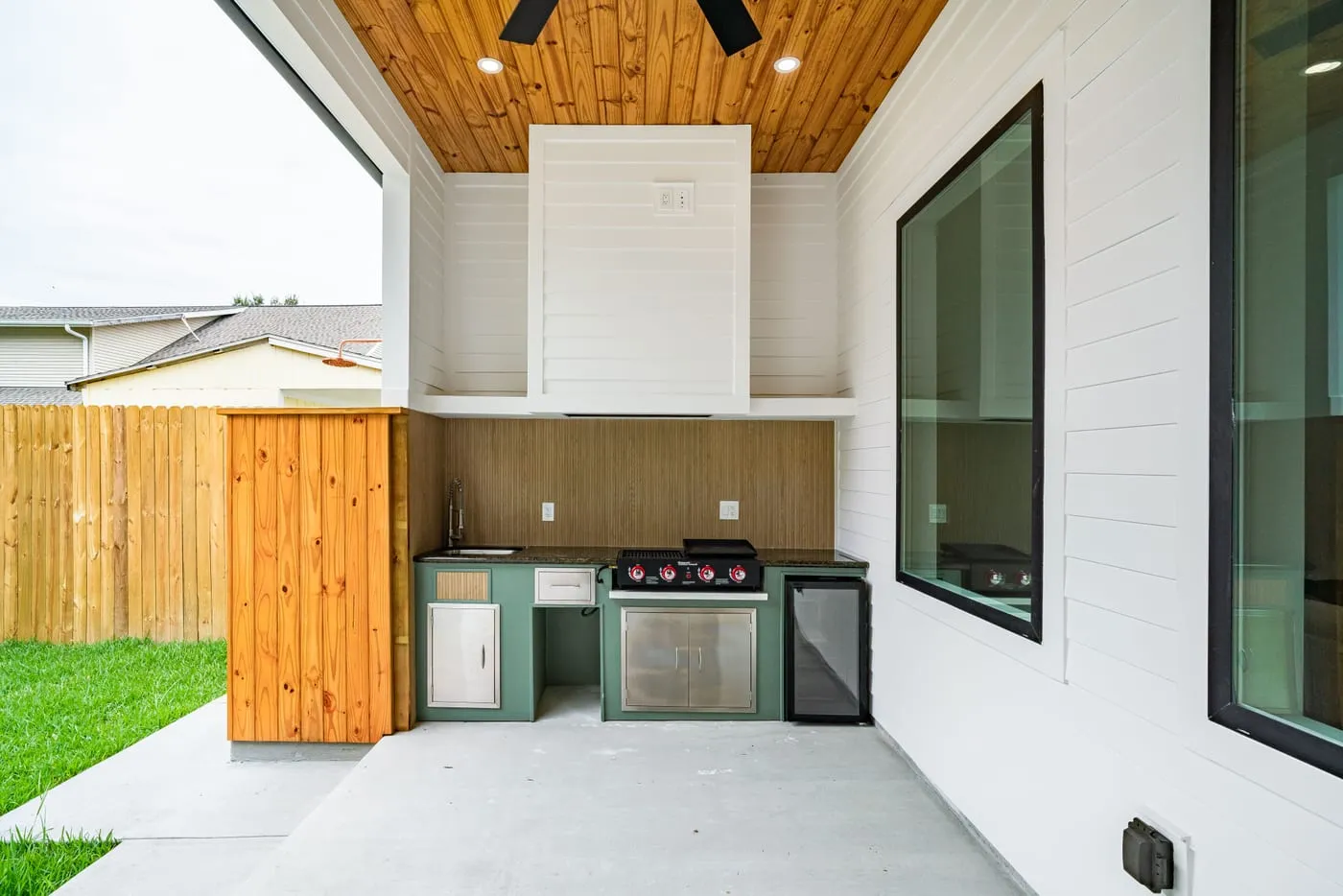
Key point: A covered patio directly off the kitchen also works well paired with an outdoor kitchen setup, since it keeps the cooking and dining zones close without a long walk carrying hot food.
06.What’s the Realistic Budget for a Full Patio Project?
A basic 12sqm open patio using exposed aggregate concrete, with no roof structure, typically costs $1,200-$2,000 AUD for materials and installation. Adding a fixed gable roof brings the total to roughly $5,500-$10,500 AUD for the same footprint, while a retractable louvre pergola pushes a full project toward $10,000-$20,000 AUD depending on size and automation features.
Staging the project, surface first, roof structure later once budget allows, is a practical way to get a usable outdoor space sooner without committing to the full cost upfront. A bare paved patio with outdoor furniture and a shade sail is a genuinely usable space in the meantime.
Project budget by stage:
| Stage | Approx. Cost (12sqm) |
|---|---|
| Surface only (exposed aggregate) | $1,200-$2,000 AUD |
| Add fixed gable roof | +$4,000-$9,000 AUD |
| Add retractable louvre pergola instead | +$8,000-$18,000 AUD |
| Furniture and finishing | $800-$3,000 AUD |
Start with the surface and get the size right before anything else — a roof structure or furniture layout can always be added later, but a patio poured too small is expensive to redo.
Related reading you might find useful:
- Outdoor Lounge Ideas Australia for furniture and layout once the surface is down
- Alfresco Dining Ideas Australia for dining-specific patio setups
- Shade Sail Ideas Australia for a lower-cost covering alternative to a built roof