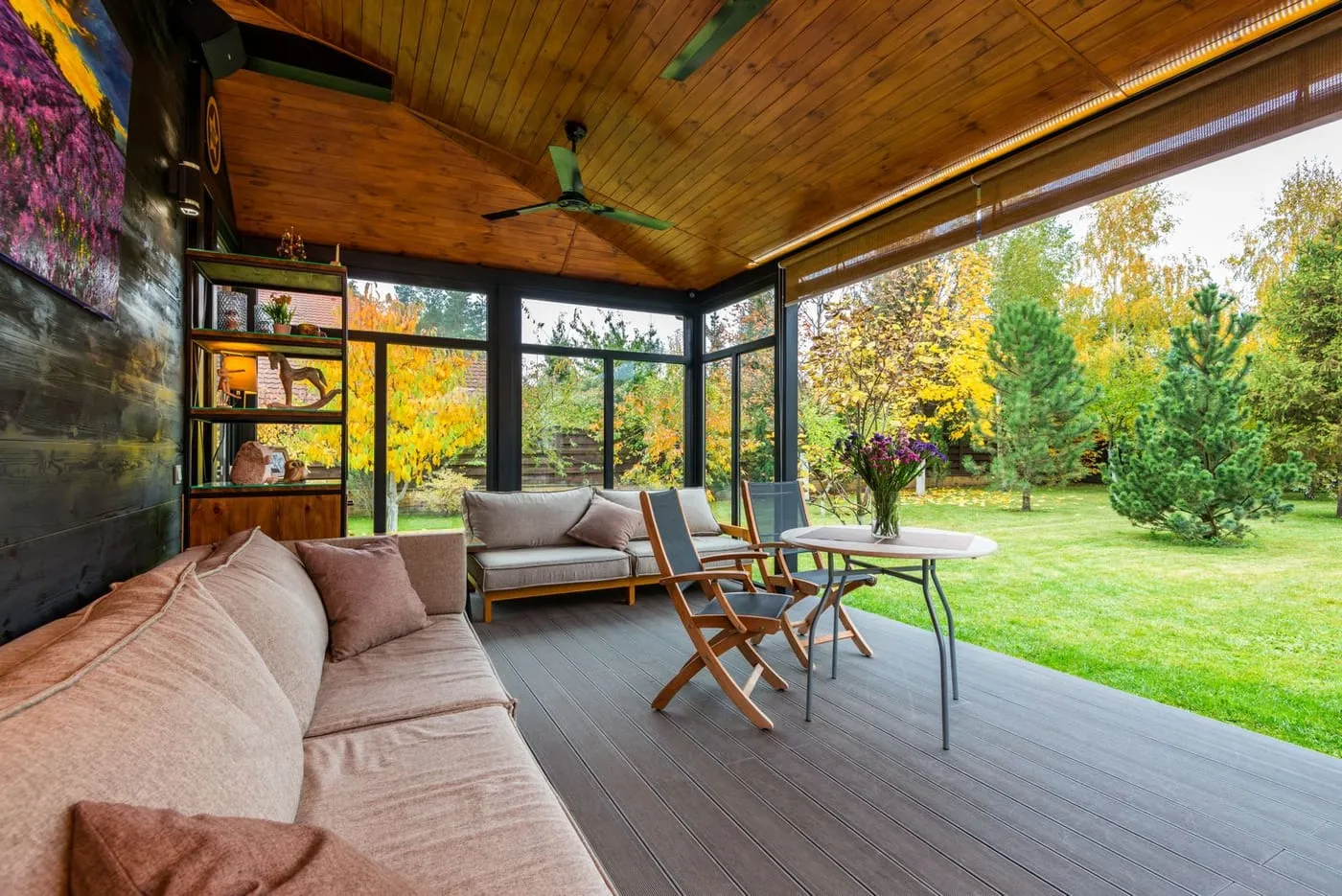
An enclosed patio design turns a backyard space that sits idle half the year into something you actually use through an Australian summer and the cooler months either side of it. The difference between “patio with a roof” and a genuinely enclosed space comes down to two decisions: how you screen it, and what you roof it with.
TL;DR: An enclosed patio gets used year-round when done right. Fixed glass costs more but survives storms; retractable screens cost less and open up fully in good weather. A solid roof — not shade cloth — is what makes it usable through summer heat.
01.Screening: Fixed Glass vs Retractable
The single biggest decision in an enclosed patio design is whether to go fixed or retractable, and it changes both the cost and how the space behaves day to day.
| Option | Typical cost (installed) | Best for |
|---|---|---|
| Retractable mesh/PVC screens | $150-$300/metre | Flexibility — fully open in good weather, closed against wind/insects |
| Fixed glass panels | $500-$1,200+/metre | Permanent enclosure, best storm and noise protection |
Retractable systems (brands like Ziptrak are common across Australian patio installers) roll up when the weather’s good and drop down against wind, rain, and insects when it isn’t. Fixed glazing costs more and usually needs council sign-off, but creates something closer to a genuine extra room.
02.Roofing: Why Solid Beats Shade Cloth
A patio roofed only in shade cloth or left as an open pergola still gets too hot to use through most of an Australian summer, because shade cloth cuts direct sun but doesn’t block radiant heat the way a solid roof does.
- Colorbond steel roofing: blocks the most heat and light, most common choice for a fully enclosed patio that needs to stay cool — Bunnings and local patio builders quote roughly $80-$150/sqm installed depending on profile
- Polycarbonate roofing: lets more natural light through (useful if the patio sits close to the house and you don’t want it dark), but transfers more heat — opt for a “heat-reducing” or multi-wall polycarbonate variant if choosing this route, which cuts the heat gain significantly versus basic single-skin sheets
03.Furniture for an Enclosed Patio
Because an enclosed patio is protected from direct weather, furniture doesn’t need to be as heavily weather-rated as fully exposed outdoor furniture — but Australian humidity and temperature swings still matter.
- A combination of a lounge sofa setup plus a separate dining table (rather than one or the other) makes the most of an enclosed patio’s protected status — it’s one of the few outdoor-adjacent spaces where a proper sofa, not just outdoor-rated wicker, can survive long-term
- Ceiling fans (standard in most enclosed patio builds) matter more here than in an open patio, since the enclosure traps air that would otherwise move freely
- Freecycle or Facebook Marketplace is worth checking before buying new — enclosed patio furniture doesn’t face the same sun/rain damage that forces people to replace fully exposed outdoor sets
04.Frequently Asked Questions
4.1What’s the difference between a screened patio and an enclosed patio in Australia?
A screened patio typically uses fly screen or mesh to keep insects out while leaving the space mostly open to air and temperature. An enclosed patio goes further — fixed or retractable glass or clear panels that also block wind and rain, turning the space into something closer to an extra room than an outdoor area. Enclosed setups cost more but extend usable months further, especially in cooler parts of Australia.
4.2Do I need council approval to enclose a patio in Australia?
Rules vary by state and council, but enclosing an existing patio with fixed glazing or solid walls often triggers development approval requirements that simply screening or adding a retractable system may not. Check with your local council before committing to fixed glass panels — retractable screen systems are more commonly exempt or complying development, since they don’t permanently alter the structure.
4.3How much does it cost to enclose a patio in Australia?
Retractable screen systems (mesh or clear PVC) run roughly $150-$300 per metre installed, depending on width and track quality. Fixed glass panel enclosures cost considerably more — often $500-$1,200+ per metre — since they involve framing, glazing, and sometimes engineering sign-off. A full enclosure on an existing covered patio typically lands somewhere between those two figures depending on which system you choose.
4.4What roofing works best for an enclosed Australian patio?
A solid insulated roof (rather than shade cloth or an open pergola) is what actually makes an enclosed patio usable through summer heat, since shade cloth alone doesn’t block radiant heat the way a solid roof does. Colorbond or polycarbonate roofing are the two most common choices — Colorbond blocks more heat and light, polycarbonate lets more natural light through at the cost of more heat transfer.
05.Related Reading
If you’re still deciding between an enclosed setup and an open design, our patio design ideas for Australian backyards guide covers the open alternative. For the garden surrounding your patio, backyard landscaping ideas pairs well, and a backyard fire pit is worth considering for the cooler months even with an enclosed space.