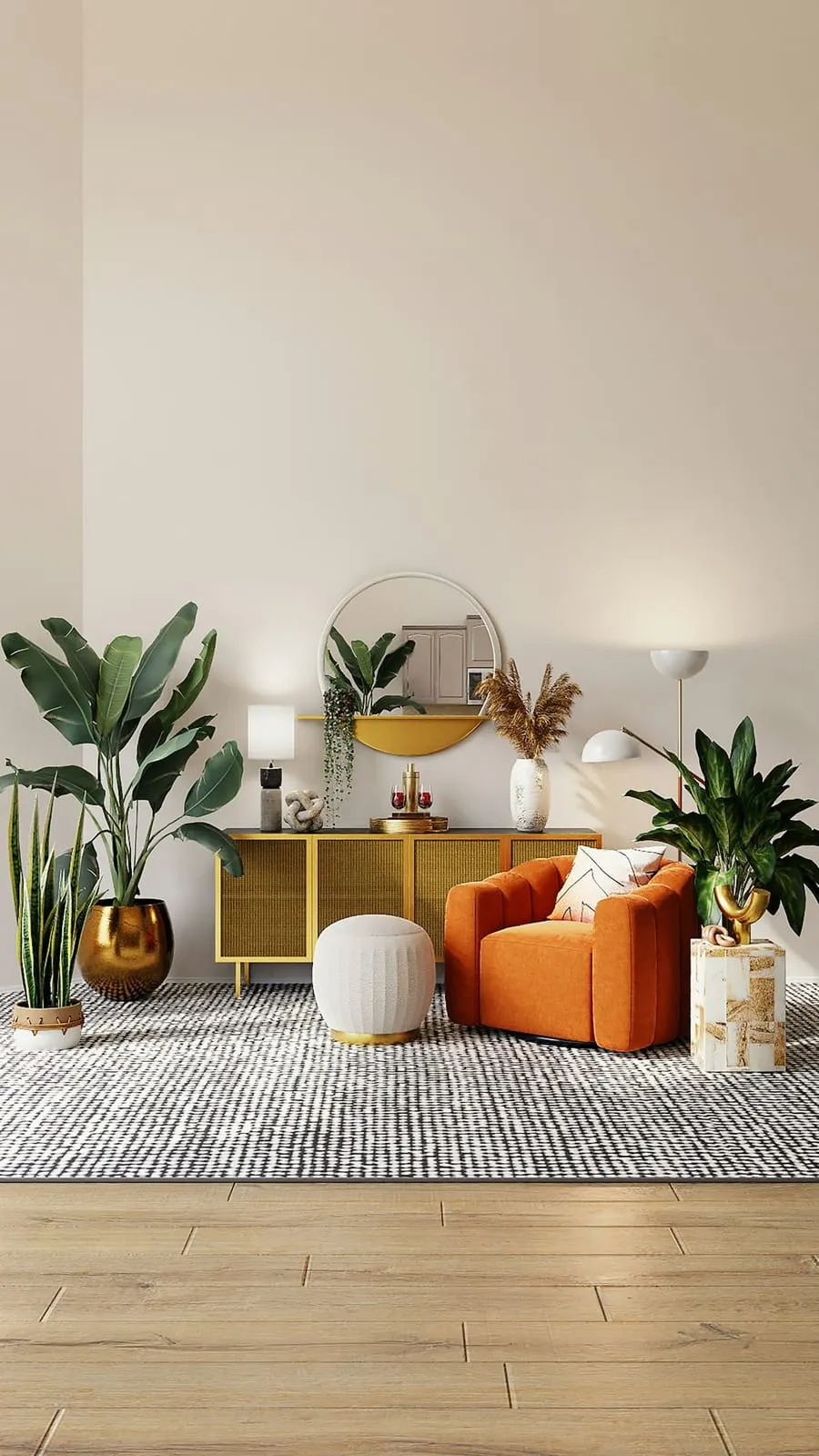
When we bought our Gold Coast home three years ago, it had cream carpet, beige venetian blinds, and the interior design personality of a dentist’s waiting room. The transformation to the light, warm, genuinely coastal home we have now cost less than $3,000 — and it happened almost entirely through rattan and linen. The natural materials movement in Australian interiors is well documented by Choice.com.au, which notes Australians are increasingly prioritising sustainable, natural materials like rattan, jute, and linen in home furnishings.
These two materials, used correctly together, are the material shorthand for the Australian coastal interior. Here’s exactly how I used them.
01.Why Do Rattan and Linen Work So Well Together?
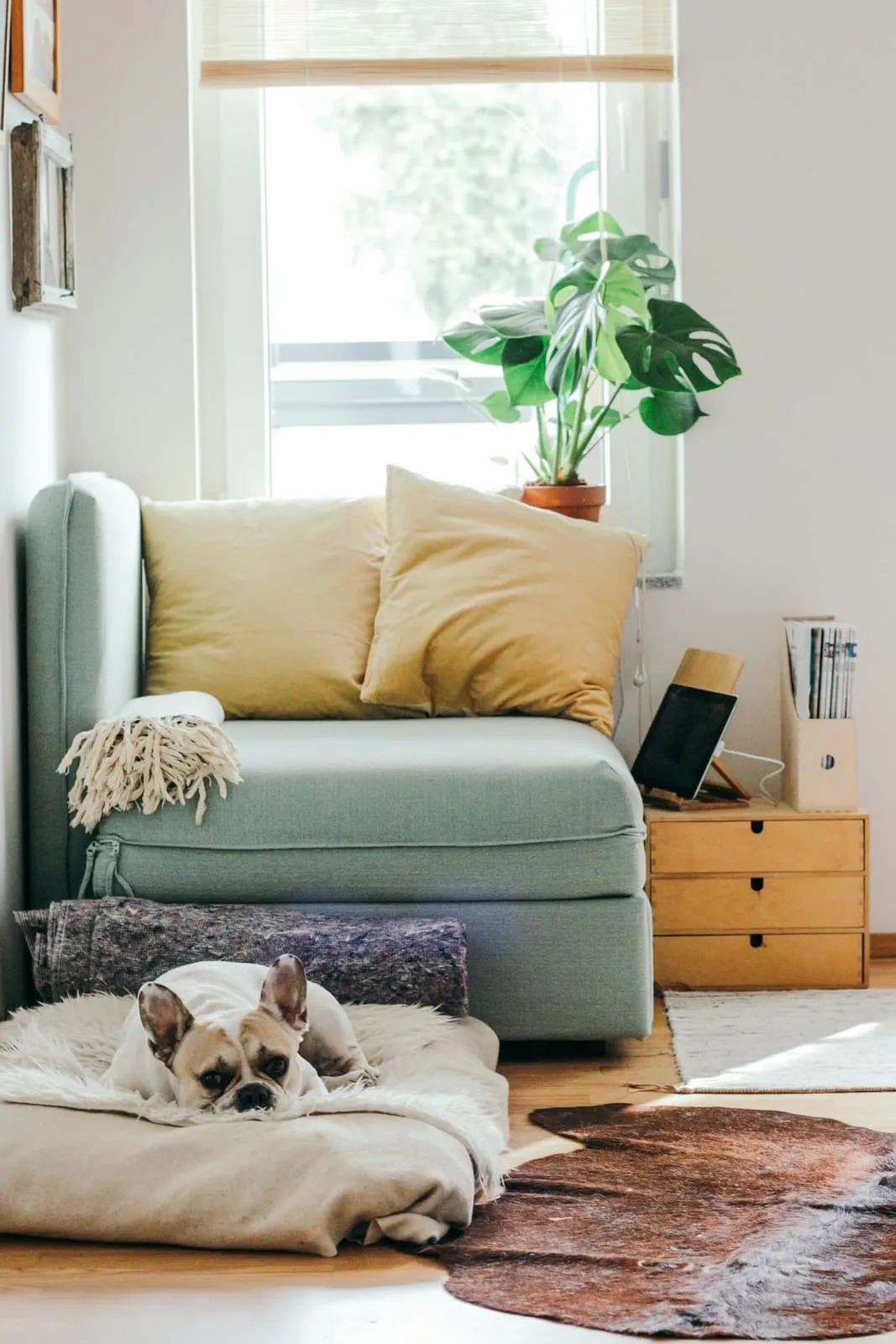
Before the shopping guide, the principle: rattan and linen work together because they’re from the same material family. Both are natural, both have visible texture, both age beautifully, and both carry the same warm, sandy colour palette. Rattan is the structure; linen is the softness. Together they create a room that feels simultaneously warm and airy — the defining quality of great Australian coastal interiors.
Every other material in the room should relate to one of these two: white-painted timber (echoes the linen), jute (echoes the rattan), terracotta ceramics (warm enough to sit beside both). Cool metals (chrome, bright stainless), shiny surfaces, and synthetic fabrics all fight the combination.
02.Why Choose Rattan for Structural Pieces, Not Just Accessories?
The mistake I made in our first attempt at coastal styling was buying rattan as accessories only — a basket here, a mirror there — while the primary furniture (sofa, dining chairs, bed) remained untouched. The look was surface-level and unconvincing.
The transformation came when I replaced the dining chairs with rattan ones (Temple & Webster, $165 each) and the bedroom pendant with a rattan shade ($89). Suddenly the whole room felt coastal. Rattan at furniture scale carries weight; at accessory scale it just adds texture.
Structural rattan pieces to consider:
- Dining or occasional chairs ($90–$500 each)
- Armchairs ($200–$800)
- Bed head ($150–$600)
- Floor lamp or pendant ($60–$250)
- Side tables ($80–$350)
03.Why Use Linen for Every Textile That Touches You?
Linen’s superiority over cotton for coastal decorating comes down to texture, breathability, and the way it ages. In Queensland’s climate, the difference in sleeping on linen versus cotton in summer is immediately noticeable — linen feels cooler against skin and wicks moisture faster.
My linen stack:
- Bedding: The Sheet Society flat sheet set ($189–$229 queen size)
- Cushion covers: Adairs linen cushion covers in white and natural ($25–$45 each)
- Curtains: IKEA AINA linen curtains ($99 per pair, two pairs per room for fullness)
- Throw blanket: Kmart linen-cotton throw ($35–$49)
The complete bedroom linen treatment (bedding, curtains, cushions) costs approximately $450–$650 AUD and lasts a decade with basic care.
04.Why Limit Rattan to Two or Three Significant Pieces Per Room?
The rule I arrived at after testing this over three homes: two or three significant rattan pieces per room is the visual maximum. Beyond that, the eye starts registering the material itself rather than the overall room, and it tips from “intentional coastal” into “tropical resort”.
Living room: Rattan armchair + rattan floor lamp = right. Add a rattan coffee table and rattan mirror and the room starts looking like a Bali villa.
Bedroom: Rattan pendant + rattan bedhead = right. Or rattan bedhead + rattan side tables. Two pieces, both different in type, complement each other. A third of the same scale overwhelms.
05.Why Let Linen Curtains Hang Floor-to-Ceiling?
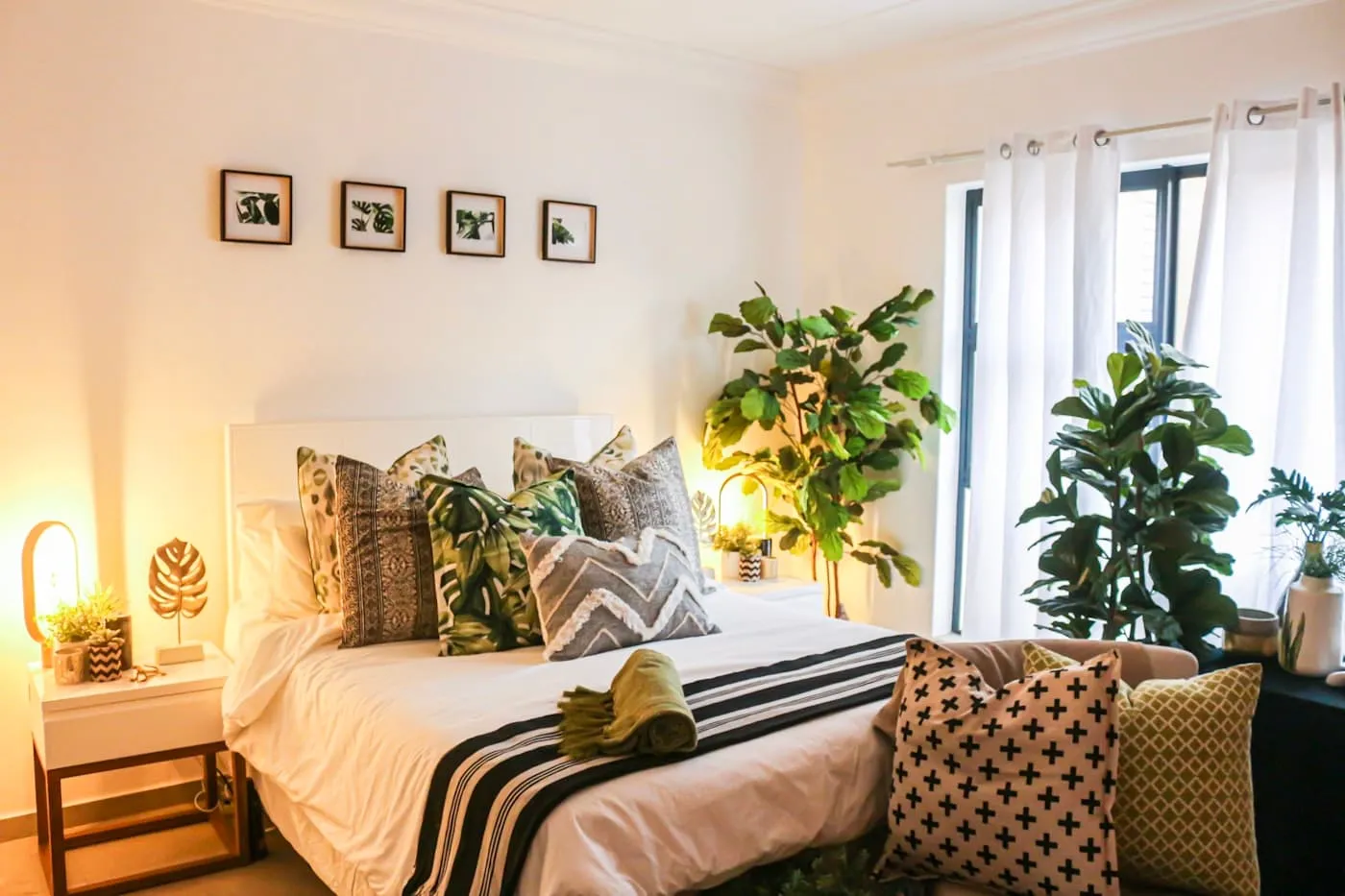
The styling detail that has the greatest impact in any room is curtains hung from ceiling height to floor. I installed curtain rods at ceiling level (not above the window frame) and hung two pairs of IKEA AINA linen curtains to the floor in our living room. The 2.4m room feels closer to 3m. The natural light is preserved while the room has volume and drama it didn’t have before.
Cost: IKEA AINA linen curtain pair (145×250cm): $99 per pair. Two pairs per window (for fullness), ceiling-mounted rod from Bunnings ($15–$30). Total: under $250 per window.
06.Why Mix Natural and Bleached Rattan Tones?
Rattan comes in a range of tones: honey gold (natural, unfinished), caramel brown (slightly darker), bleached/white (painted or naturally pale), and black (lacquered). The most flexible combination for Australian coastal interiors is natural and bleached together.
In our living room: natural honey rattan armchair beside a bleached-frame rattan pendant. The two tones in the same material family add depth without visual conflict. Avoid mixing natural rattan with dark-lacquered rattan — the contrast is too strong.
07.Why Choose Linen in White, Natural, and Sage — Nothing More?
The linen palette I use across our whole home: white, natural (undyed, slightly beige), and a single accent colour — in our case, sage green. That’s three tones. It sounds restrictive and it’s the most liberating decision I made, because every cushion, throw, and curtain coordinates without any effort.
The problem with too many linen colours: Coastal interiors work on consistency. Introduce dusty pink, terracotta, and sage all together and the cohesion breaks down. Choose one accent — sage, dusty blue, or terracotta — and let white and natural do the rest.
08.Why Add Rattan Mirrors to Bounce Light?
Mirrors are the secret weapon of coastal decorating. They reflect light, create the illusion of depth, and add visual interest without taking up floor space. A rattan-framed mirror specifically amplifies both the light-reflecting function and the coastal aesthetic.
What I use: A large round rattan mirror (90cm diameter) in our hallway from Temple & Webster ($119) and a smaller version in the bathroom ($65). The round form is more typical of current Australian coastal style than rectangular; the rattan frame ties the mirror into the material palette of the room.
09.Should You Use Linen in the Bathroom?
The most overlooked application of linen in coastal decorating is the bathroom. Waffle-weave linen hand towels from Adairs ($15–$25 each), a linen guest towel set, or a linen shower curtain (Temple & Webster, $89–$189) all carry the coastal material story into a room that’s often neglected in the decorating plan.
A rattan mirror, white waffle-weave linen towels, and a single trailing plant is the simplest and most effective coastal bathroom treatment I know.
10.Why Source Rattan Second-Hand Before Buying New?
One of the most authentic coastal homes I’ve seen was almost entirely furnished in vintage rattan sourced from Facebook Marketplace. Rattan is one of the most durable natural materials in furniture — a 20-year-old rattan armchair in good condition is functionally and aesthetically identical to a new one, often with more character.
Where to look: Facebook Marketplace (search “rattan armchair” or “cane furniture”), Gumtree, and local charity shops. Expect to pay $30–$150 for what would cost $200–$600 new.
11.Why Layer Linen Textures, Not Colours?
The richest-looking linen rooms I’ve seen don’t use multiple colours — they use multiple textures. A chunky linen knit throw beside a smooth linen cushion cover beside a loosely woven linen curtain: all the same colour (natural), three different textures. The effect is layered and warm without ever being busy.
Texture sources:
- Waffle weave: Adairs, The Sheet Society
- Chunky knit: Kmart ($35–$49 throws)
- Smooth weave: IKEA AINA curtains
- Washed relaxed: The Sheet Society linen bedding
12.How Do You Complete the Room With Jute and Terracotta Accents?
Rattan and linen are the lead materials; jute and terracotta are the supporting cast that makes the combination feel complete. A jute rug under the furniture grounds the room and connects it to the natural landscape. A terracotta pot for the indoor plant adds warmth and the specific earthy tone that prevents the neutral palette from reading as cold.
The complete room formula: White walls + natural timber or whitewashed boards + jute rug + linen sofa + rattan accent chair + linen curtains + terracotta pots + rattan pendant. Every element available at Kmart, Temple & Webster, or Adairs. Total budget: $1,200—$3,500 for a full living room depending on furniture investment.
13.Start Here: Priority Order
| Priority | Action | Approx. Cost |
|---|---|---|
| 1 | Add a jute or natural fibre rug — the foundation of coastal styling | ~$89–$400 AUD |
| 2 | Switch to linen bedding or linen-look cushion covers | ~$49–$229 AUD |
| 3 | Add one significant rattan piece (pendant, mirror, or armchair) | ~$45–$400 AUD |
| 4 | Style with wicker baskets and natural ceramic accessories | ~$20–$80 AUD |
| 5 | Add trailing indoor plants in simple terracotta pots | ~$15–$40 AUD |
Related reading: