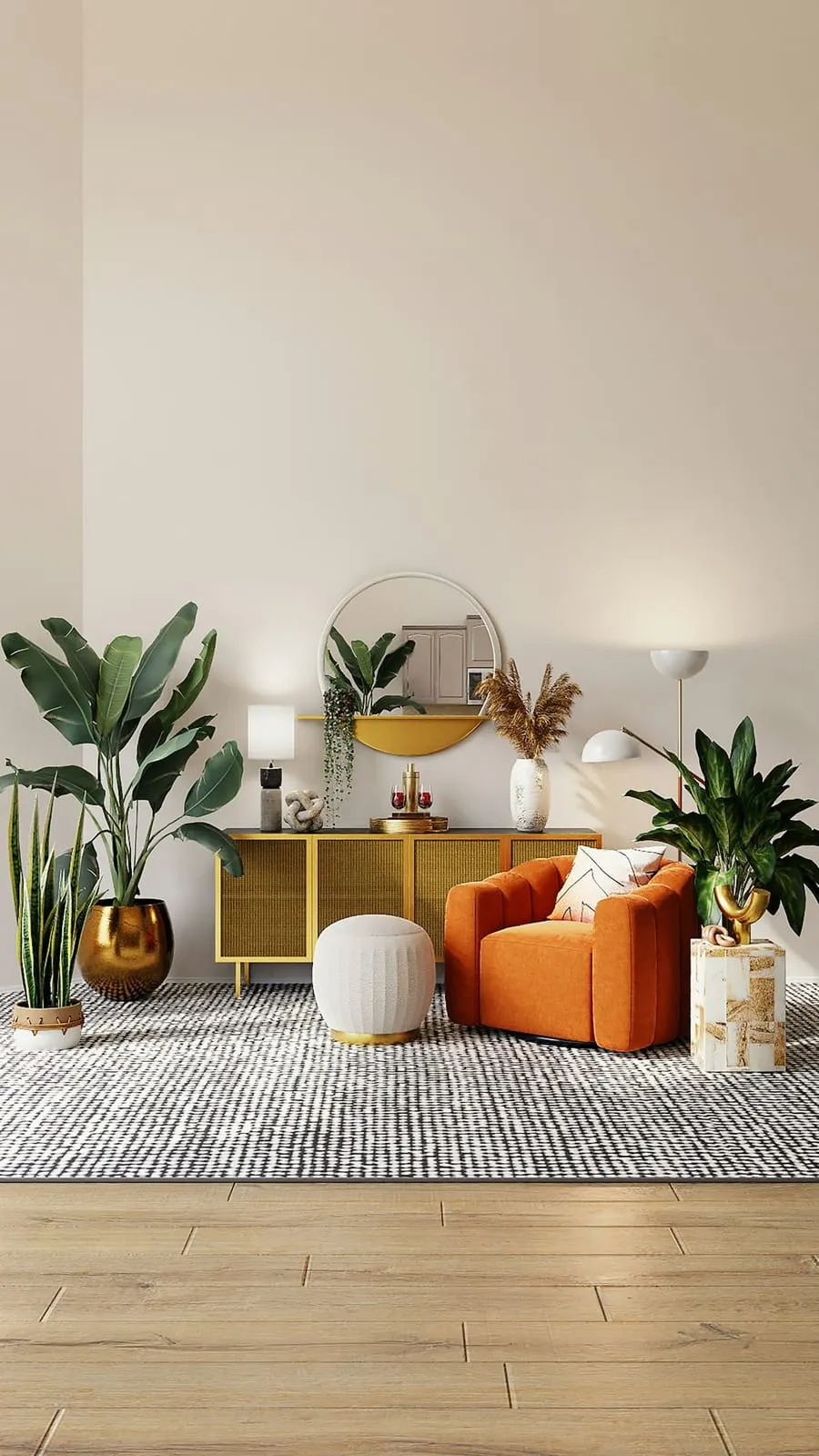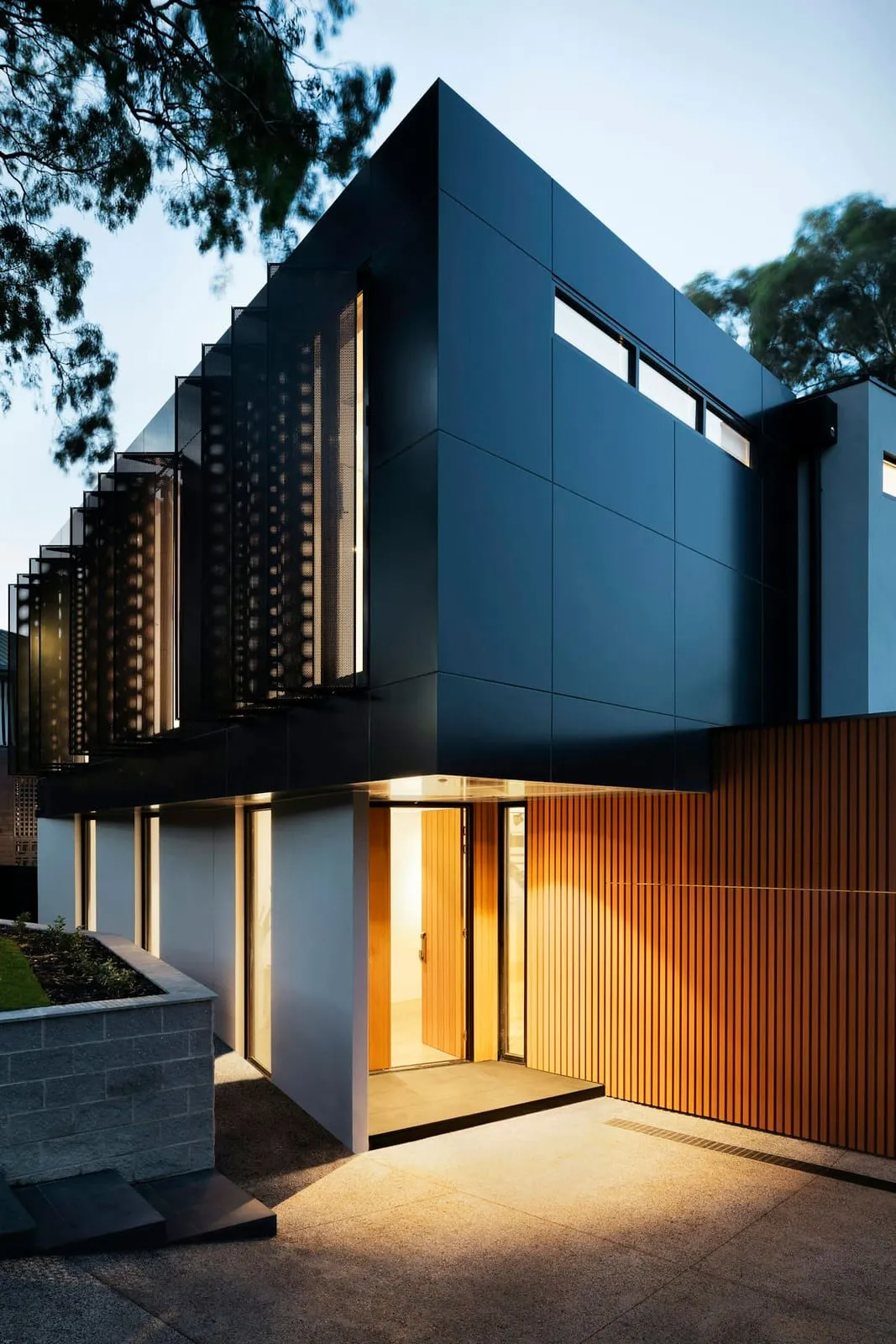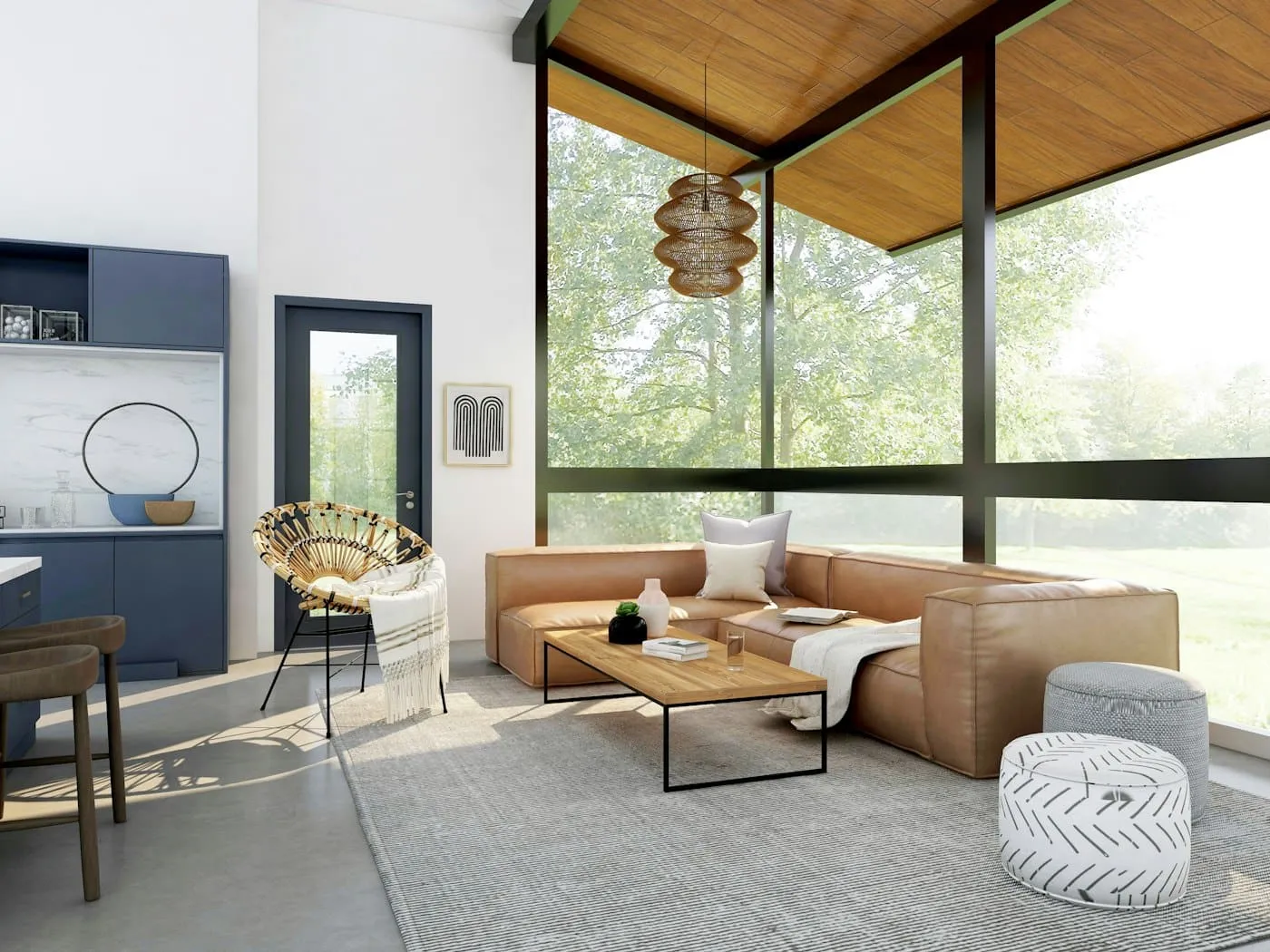
Coastal interior design is the discipline I’ve been practising — often accidentally, then increasingly intentionally — across every home I’ve lived in over the past eight years. The Gold Coast is my context, Australian summer is my climate, and the indoor-outdoor life is my daily reality.
These are the 13 principles I return to every time I’m designing or redesigning a space. Choice.com.au notes that Australians are increasingly selecting natural materials — linen, jute, rattan, and timber — for their interior design, reflecting a broader shift toward sustainable, tactile coastal living.
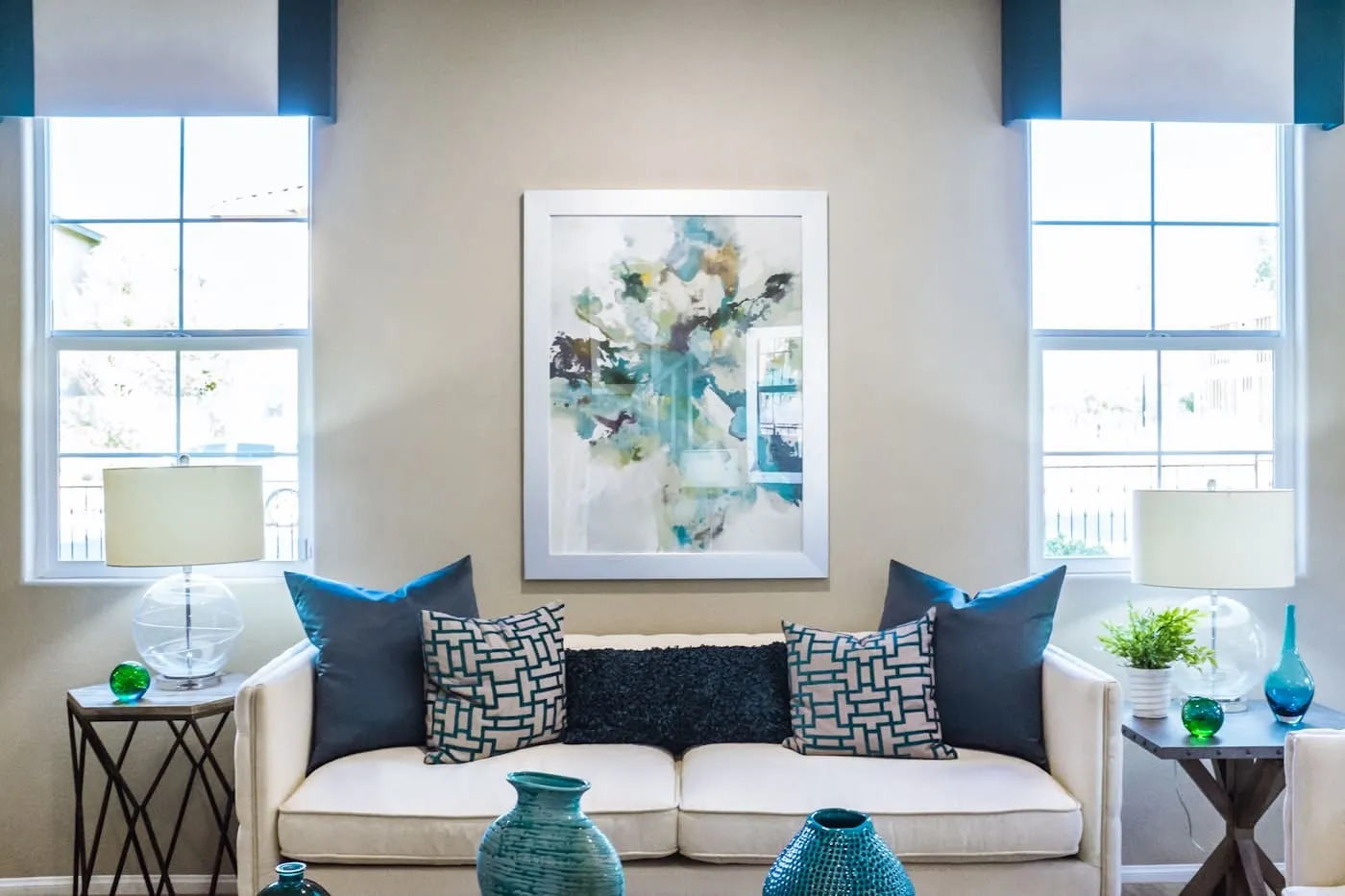
01.Why Start With Light as the Primary Material?
In coastal interior design, natural light is treated as a material — not a given, not a background condition, but as an active design element that shapes the character of every room. Before I buy any furniture, choose any paint colour, or hang any art, I analyse the light in a room: which direction does it face, what time of day is it strongest, what obstructs it, and what amplifies it?
Practical applications:
- South-facing rooms in Australia receive indirect, even light — the most flattering for white walls and linen. No action needed.
- North-facing rooms receive intense direct sun — use linen sheers to filter rather than block.
- East-facing rooms have glorious morning light — position seating to capture it, not block it.
- West-facing rooms have harsh afternoon light — this is where I use proper linen curtains or louvred shutters.
The first investment in any coastal interior is never furniture — it’s removing what blocks the light (heavy curtains, shutters that stay closed) and adding what amplifies it (light paint, mirrors, reflective surfaces).
02.Why Apply the Warm White Palette Before Everything Else?
Warm white walls are the pre-condition for everything else in coastal interior design. Every natural material — jute, rattan, linen, timber — looks beautiful against warm white. The same materials against cool grey, dark colour, or cream-beige look heavy and confused. For a thorough room-by-room breakdown of how to apply this palette, the coastal home decor Australia guide covers every space from the living room to the alfresco.
My palette applied across an entire home:
- Walls: Dulux Natural White (all rooms, consistent)
- Trim and doors: Dulux Vivid White semi-gloss (brighter than the wall, high contrast detail)
- Ceilings: White on White (brightest possible, reflects light down)
- Floors: Pale oak engineered boards (warm, natural, connects to the wall tone)
The consistency is the point. Different whites in different rooms create visual discord. One warm white throughout creates the seamless, airy quality that defines the best coastal interiors.
03.How Do You Choose Natural Materials at Every Scale?
The coastal interior material hierarchy: natural at large scale (timber floors, jute rug, linen sofa), natural at medium scale (rattan chair, woven basket, ceramic lamps), and natural at small scale (terracotta pots, woven coasters, wooden accessories). Every scale of visual decision uses the same material vocabulary.
The material checklist per room:
- Floor: timber, jute, or stone — never synthetic
- Upholstery: linen or natural cotton — never polyester
- Window treatment: linen sheer — never synthetic voile
- Accent furniture: rattan or light timber — never plastic
- Accessories: ceramic, timber, woven — never acrylic
Exceptions for function are acceptable (synthetic outdoor fabric for outdoor cushions, for example). Exceptions for aesthetics are where coastal design goes wrong.
04.How Do You Maximise the Indoor-Outdoor Connection?
Australian coastal interior design is inseparable from the outdoor space. The home extends to the alfresco, the backyard, the balcony — and the interior design should acknowledge this. The connection is both visual (the outdoor space visible from inside, with consistent materials and palette) and physical (doors and thresholds that open rather than close the connection).
How I apply this:
- All external doors facing the garden remain open during the day — the living room becomes the alfresco connection
- Consistent material palette indoors and outdoors (jute rug inside, polypropylene outdoor rug in matching tone outside)
- Indoor plants positioned to echo the garden visible beyond the glass
- Furniture in the outdoor space in the same colour palette as the indoor furniture
05.Why Layer Textures Rather Than Colours?
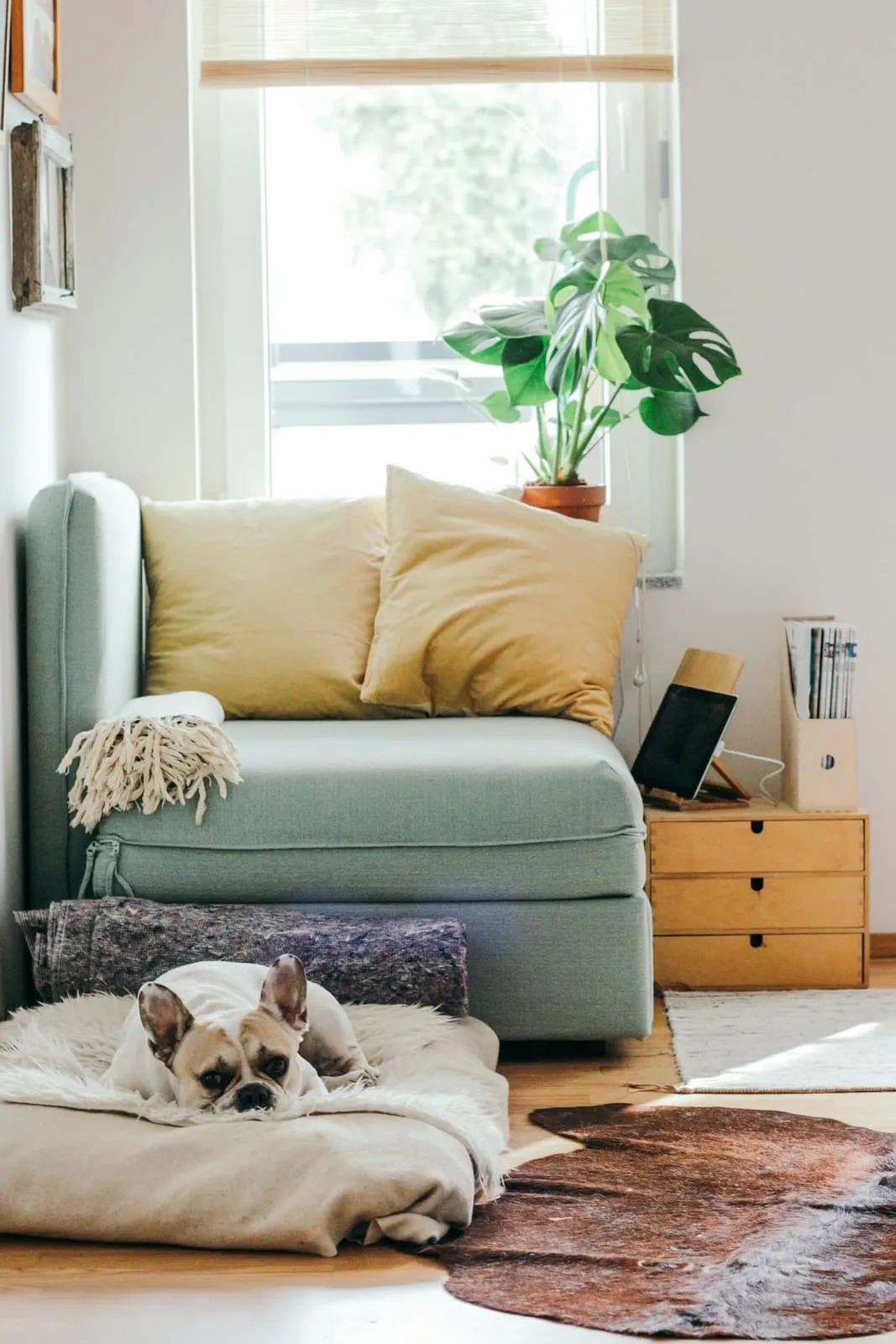
The richest-looking coastal rooms aren’t full of colour — they’re full of texture. I’ve learned to think of texture as the primary dimension of interest in a coastal interior: smooth linen versus chunky woven, fine ceramic versus rough terracotta, polished timber versus raw jute.
A room where all surfaces are the same texture — all smooth, all rough, all woven — reads flat regardless of how beautiful the individual pieces are. The combination of textures creates visual richness that colour never quite achieves in a neutral coastal palette.
The texture layer in our living room:
- Jute rug: large weave, matte, floor level
- Smooth linen sofa: medium scale, upholstered surface
- Rattan armchair: woven structural texture, medium scale
- Waffle-weave cushions: close-woven texture on the sofa
- Terracotta pot: fine-grain ceramic surface
- Linen curtains: hanging texture at window scale
Six different textures, all from the natural material family. The result is a room that rewards looking at closely.
06.Why Edit Relentlessly — Is Less Always More?
Coastal interior design requires more editing than adding. The fundamental error in most Australian coastal decorating attempts I’ve seen is having too many objects — surfaces covered, shelves full, every corner occupied. The coastal aesthetic depends on breathing room.
My editing discipline: once per season, I clear every surface in every room and return objects one at a time, in groups of odd numbers (1, 3, or 5), with space between them. Anything that hasn’t been noticed in three months goes into a box. After three more months, if I haven’t gone looking for it, it goes to the op shop.
07.How Do Mirrors Multiply Light in a Room?
Mirrors in coastal interiors serve a specific design purpose: multiplying natural light in rooms that need it. A large mirror (90cm or wider) on a wall opposite a window doubles the apparent depth of the room and creates the illusion of a second light source.
What I use:
- Arched mirror (90×180cm) in the dining room opposite the garden window: $299, Temple & Webster
- Round rattan mirror in the hallway (60cm diameter): $119, Temple & Webster
- Bathroom mirror in whitewashed timber frame: $89, Kmart
Combined effect: every room with a mirror feels larger and brighter than its actual dimensions.
08.Why Choose Furniture That Sits Low?
Furniture height is underappreciated as a coastal design principle. Low furniture — sofas with low arms and backs, coffee tables at 35—40cm height, beds without tall headboards — allows the eye to travel through the room without interruption and reinforces the horizontal quality of the coastal landscape.
Australian coastal design has moved away from the high-back sofa and the formal dining chair toward lower, more lounging-friendly proportions. A sofa with 70—75cm seat height (versus the standard 80—85cm) dramatically changes the spatial feel of a living room.
09.How Do You Design the Kitchen in White and Natural Timber?
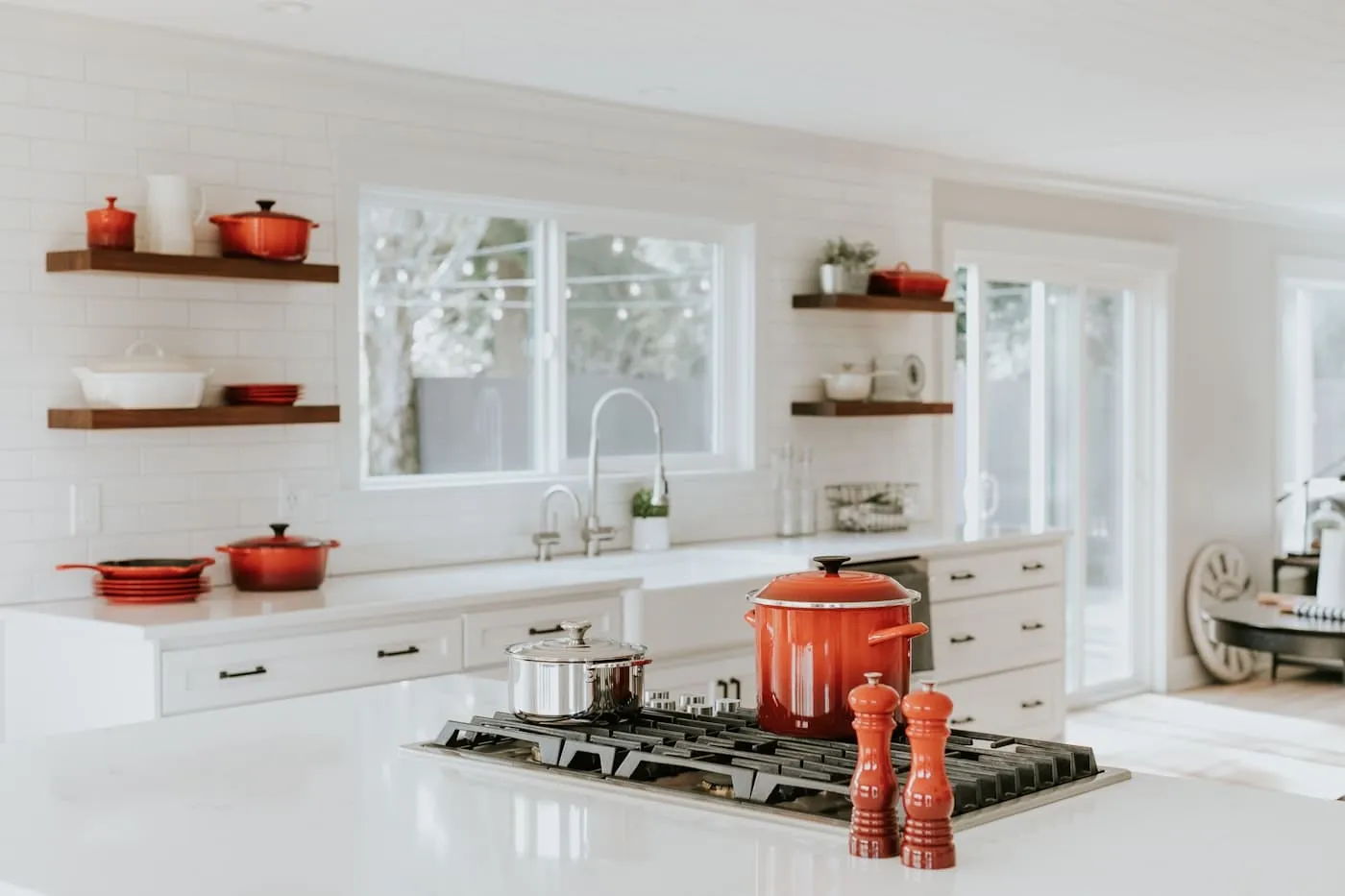
The coastal kitchen is a white kitchen — white shaker-profile cabinetry, white or stone-look benchtops, white subway tile splashback. The natural timber element: open shelving in light timber, or timber legs on a kitchen island. The Australian coastal colour palette guide goes deeper into how to choose whites, timber tones, and accent shades that work together across the entire home including the kitchen.
The details that make a coastal kitchen:
- Brushed nickel or matte brass hardware on white cabinetry
- Rattan bar stools at the island or breakfast bar (Temple & Webster, $220–$450 per stool)
- Open shelving displaying white ceramics and coastal accessories
- A statement pendant light over the island (rattan, glass, or white ceramic)
The coastal kitchen is not a dark kitchen, not a two-tone kitchen, and not a kitchen with coloured cabinetry. It’s white, and it’s the white that makes it coastal.
10.How Do You Design Each Bedroom as a Retreat?
The coastal bedroom is the most personal coastal room — and the one where the quality of the material choices matters most, because you literally live in it. Linen bedding is non-negotiable. A rattan element (bedhead, pendant, or bedside table) at minimum one per bedroom. Curtains to the ceiling. No overhead lights — bedside lamps only in the evening.
11.How Do You Treat the Bathroom as a Coastal Space?
The coastal bathroom is often the last room given design attention and it deserves more. White stone-look or subway tiles, rattan mirror, white waffle-weave towels, a trailing plant on the shelf, and a single quality scented candle or diffuser. The same materials and palette as every other room in the house — consistency is the point.
12.How Do You Let the Architecture Breathe?
The best coastal homes don’t fight their architecture — they work with it. If your home has good bones (high ceilings, large windows, open plan), the coastal design approach is to maximise those qualities. If your home has low ceilings and small rooms, the approach is compensatory: ceiling-height curtains, light colours, mirrors, and restraint in furniture scale.
13.Should You Design for How You Live or How It Photographs?
The coastal interior that appears most beautiful in lifestyle photography is often the one that functions least well as a home. No books visible on the shelves. No children’s things on the floor. No dog bed in the corner. No actual life.
The coastal interiors I genuinely admire — and the version of my own home I’m most proud of — show evidence of being lived in. Books on the coffee table (ones that are actually being read). A dog-eared magazine on the side table. Flowers that are two days past their best. A throw that’s been used and not refolded.
Design for life, not for photos. The life version is always more beautiful.
14.Start Here: Priority Order
| Priority | Action | Approx. Cost |
|---|---|---|
| 1 | Establish the colour foundation: warm white walls + natural timber | ~$65–$200 AUD |
| 2 | Layer natural textures: jute rug + linen upholstery + rattan accent | ~$200–$800 AUD |
| 3 | Edit down to essentials — coastal style needs space and restraint | Free |
| 4 | Add coastal art in simple frames | ~$50–$300 AUD |
| 5 | Bring in indoor plants — at least one trailing variety | ~$15–$60 AUD |
Related reading: