Our Gold Coast backyard is 6×8 metres. When we moved in, I stared at it and genuinely didn’t know how we’d ever host a gathering. Five years later, it’s the space where we have our most enjoyable entertaining — birthday dinners for 12, post-Christmas drinks for 20, casual Sunday afternoons that somehow become long evenings. Domain.com.au research shows that well-designed small outdoor spaces add disproportionate value to Australian properties — buyers consistently rate outdoor entertaining areas as a top priority, regardless of block size.
The trick isn’t the space itself. It’s learning to use every part of it correctly.
01.How Do You Zone the Space Into Three Areas — Even If They Overlap?
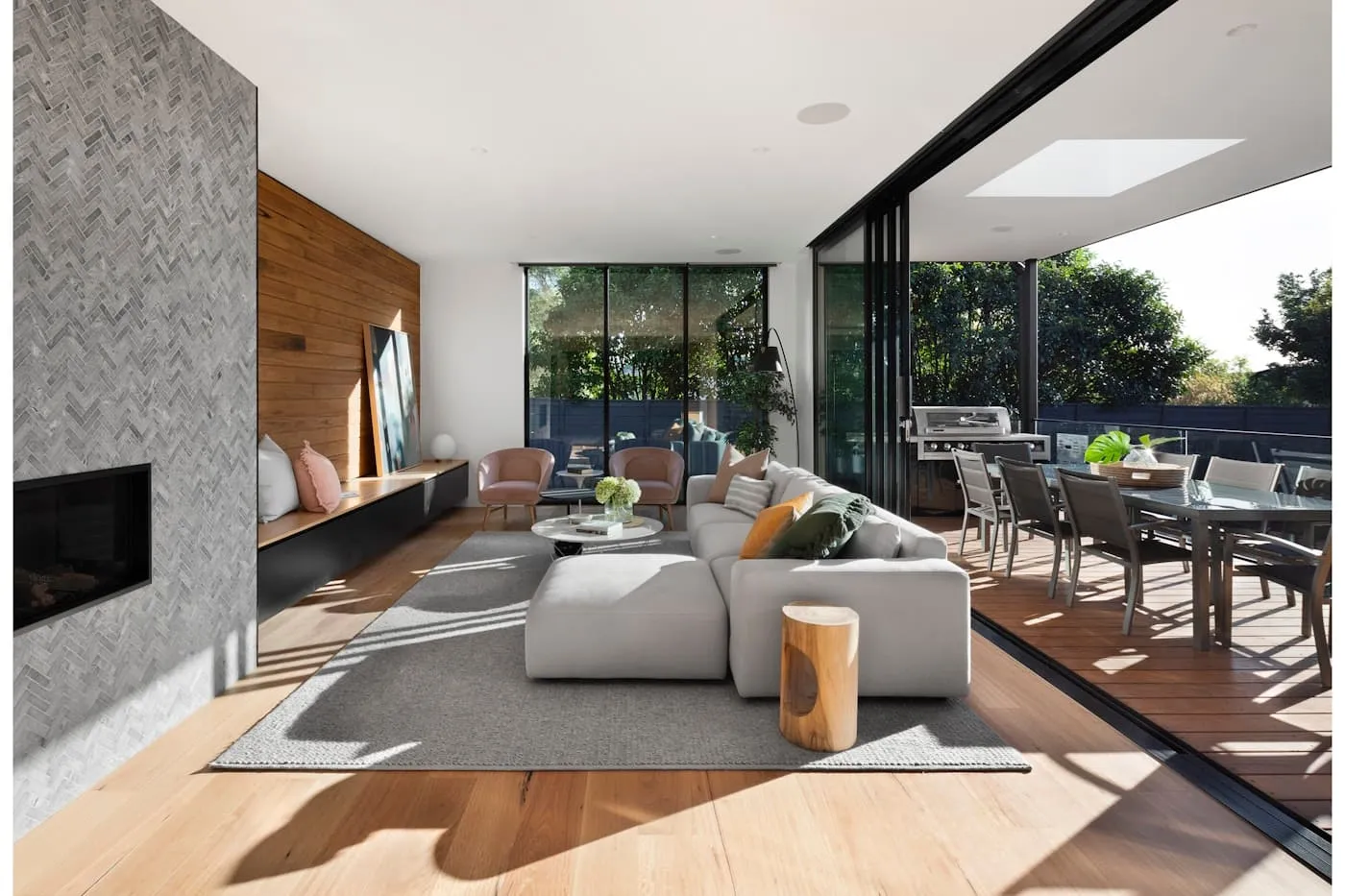
The biggest mistake in small backyard entertaining is treating the whole space as one undifferentiated area. Even in a 6×8m yard, you can define three distinct zones: a dining area, a drinks/lounge area, and a BBQ station. The furniture arrangement creates the zones — they don’t need walls.
My layout: Dining table and chairs in the centre (the primary zone), a small bar cart and esky in one corner (the drinks zone), and the BBQ on a rear side with a small prep table beside it (the cooking zone). Guests naturally distribute themselves across the three areas rather than clustering in one spot.
02.Should You Buy a Fold-Out Extension Table?
The single most important furniture investment for a small backyard is an extension table. My current table is a 4-seater that extends to 8 with a single leaf, and then clips onto a folding extension table to seat 12 for the bigger gatherings. On a normal Tuesday night, it’s compact. On Christmas Day, it seats the whole family.
Options:
- Kmart 4-to-8 seat extension table: $149–$249
- Temple & Webster outdoor extension dining tables: $399–$999
- Bunnings timber extension table (self-assembly): $199–$349
The folding extension table approach (a separate fold-out table that joins the primary table) is the most space-efficient. Both tables store flat against a wall or in a shed when not in use.
03.Why Use Bench Seating Along One or Two Sides?
Bench seating takes up roughly 40% less floor space than individual chairs and can accommodate more people per linear metre. I added a simple timber bench along our fence line on one side of the dining table — it seats four across the length that individual chairs would seat three, and tucks under the table completely when not in use.
DIY option: A basic treated pine bench from Bunnings timber department, sanded and oiled, costs $40–$80 in materials and half a Saturday to build.
Buy option: Temple & Webster and Kmart both stock outdoor benches from $79–$299.
04.Should You Install a Shade Sail Above the Primary Dining Area?
In the Queensland and NSW heat, a small backyard without shade is an unusable backyard for half the year. A shade sail was the single investment that transformed our backyard from a five-months-a-year space into a year-round one.
What I installed: A 3×3m Coolaroo shade sail from Bunnings ($89) attached to three fence posts with stainless marine rope. Blocks 90% of UV, withstands typical Queensland weather (strong rain and wind), and cost under $150 installed in an afternoon.
Cantilever umbrella alternative: For renters or those who can’t attach to fence posts, a cantilever umbrella from Bunnings ($249–$799) provides shade without requiring attachment points. The cantilever design keeps the pole out of the central floor space.
05.How Do You Use Vertical Space on the Fences?
The fences in a small backyard are the most underused real estate. Vertical space adds greenery, privacy, and visual dimension without removing a single square metre of floor area. What I’ve added to our fence line:
- Star jasmine on a wire trellis along the back fence (planted four years ago, now a full green wall in summer)
- Three wall-mounted metal planters from Bunnings ($35–$65 each) with trailing succulents on the side fence
- A horizontal slatted privacy screen panel over the top section of the gate-side fence
The result is a backyard that reads as much larger than its footprint because there’s visual interest at multiple heights.
06.Why Choose Stackable Chairs for Flexible Seating?
For a small backyard, standard dining chairs are too space-consuming for the number they seat. I switched to Tolix-style metal stackable chairs (Temple & Webster, $65–$110 each) — four live outside year-round, four more stack in the shed and come out for gatherings. Eight chairs stored in the same footprint as two standard dining chairs.
Australian options:
- Kmart metal café chair: $39 each, stackable, colour options include white, black, and natural
- Temple & Webster Tolix-style chairs: $65–$110 each, more robust finish
- Bunnings outdoor folding chair: $25–$45, folds flat for storage
07.How Do You Create a Dedicated Drinks Station in a Corner?
A drinks station in one corner of the backyard removes the constant traffic to and from the kitchen and creates a natural gathering point that keeps flow away from the dining table. In a small space, distributing the activity points across the space is essential for managing crowd movement.
My setup: A small weatherproof cabinet from IKEA (GREJIG outdoor unit, $129) in a corner, with a bar tray on top for spirits and mixers, and a 35L Dometic cooler beside it for cold drinks. Total cost: under $300.
08.Why Use Ground-Level Lighting as Well as Overhead?
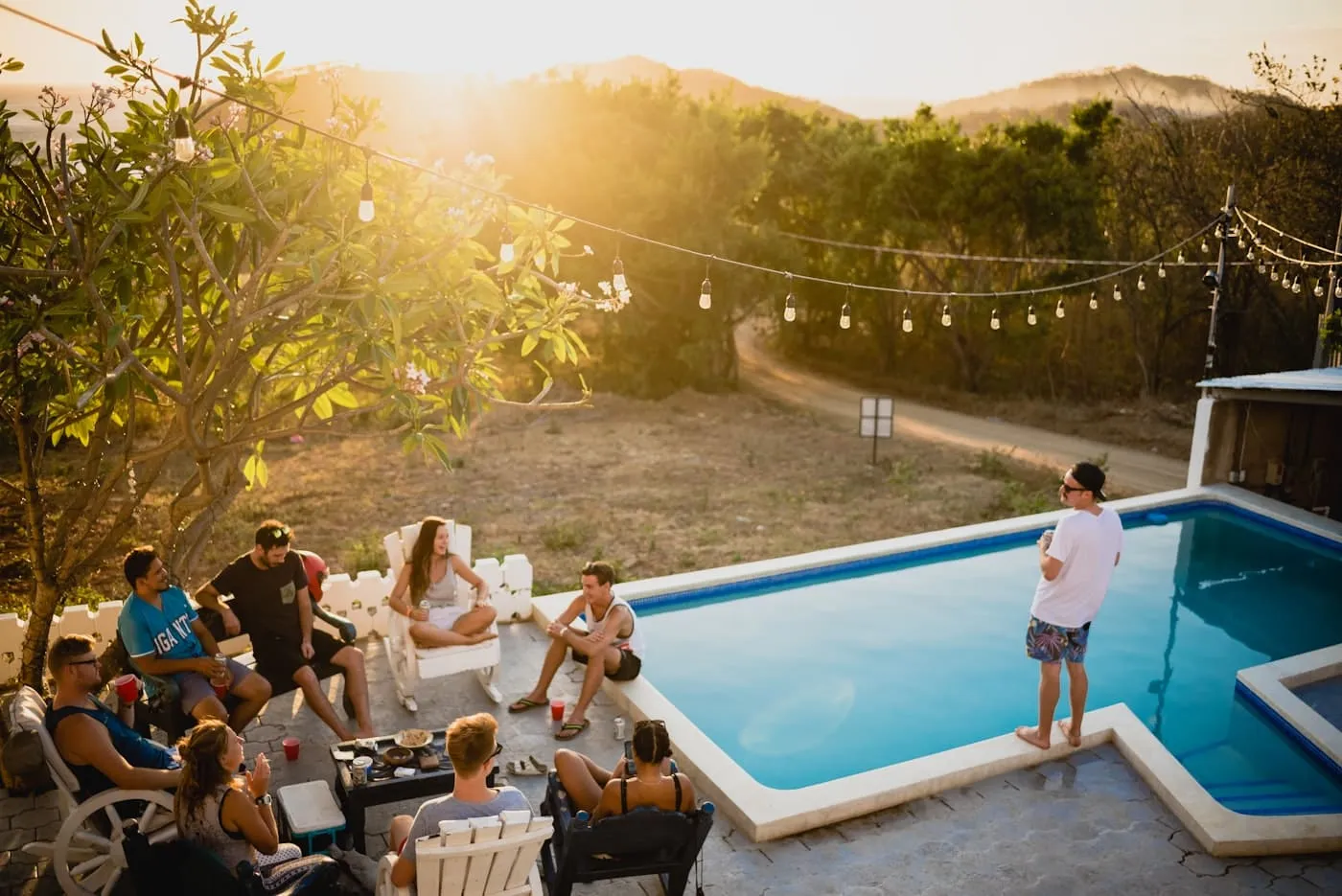
Festoon lights overhead (the obvious choice) create a beautiful canopy for evening entertaining. But ground-level lighting — solar stakes along the garden edges, lanterns on the table, and candles on any surface — adds depth and warmth that overhead lights alone can’t achieve.
My layer:
- Festoon lights: 10m Eglo string from Bunnings ($65), run along two fence lines
- Four solar path stakes from Bunnings ($6–$8 each) along the garden bed edges
- Two hurricane lanterns on the dining table with pillar candles ($15 each, Kmart)
The combination costs under $130 and creates an outdoor room atmosphere that makes the space feel intentional and warm.
09.Should You Add a Wall-Mounted or Hanging BBQ Tool Organiser?
In a small backyard, the BBQ area needs to be compact and organised. A wall-mounted magnetic rack or hook bar for BBQ tools from Bunnings ($25–$45) keeps tongs, brushes, and spatulas within reach without requiring a separate surface. A small fold-out prep shelf ($49–$89 from Bunnings) clips onto the BBQ itself for plates and condiments.
10.Why Paint the Fence a Light Colour?
A dark fence in a small backyard makes it feel enclosed and smaller. Painting our fence Dulux Natural White with a semi-gloss exterior finish visually expanded our backyard by — genuinely — what felt like 30%. Light colours on vertical surfaces reflect light and recede visually, making the space feel more open.
Cost: Dulux Weathershield exterior paint, 4L ($75–$95 from Bunnings), covers approximately 40 linear metres of standard paling fence at a single coat.
11.Why Keep the Floor Surface Continuous and Light?
We replaced the original dark charcoal concrete pavers with large-format (600×600mm) light sandstone-look pavers from Beaumont Tiles. The change was dramatic — the space felt 40% larger after the repavement. Large-format light-coloured pavers are the most effective floor-level change for making a small outdoor space feel larger.
Budget alternative: If full repaving isn’t feasible, a large outdoor rug over existing paving achieves a similar visual expansion effect and can be removed or changed seasonally.
12.Should You Invest in Outdoor Lighting on a Timer?
The finishing detail that makes a small backyard feel like a well-considered outdoor room is lighting that comes on automatically at dusk. A $15–$25 timer plug from Bunnings on the festoon lights means the backyard is always ready when you step outside in the evening — no switching things on, no missing the magical early-dusk moment.
For a permanent solution, a licensed electrician can wire outdoor power points and sensor lights for $300–$600, giving you reliable outdoor power that doesn’t rely on extension leads.
13.Start Here: Priority Order
| Priority | Action | Approx. Cost |
|---|---|---|
| 1 | Define the main zone with a compact outdoor rug | ~$89–$200 AUD |
| 2 | Add vertical privacy screening or a garden panel | ~$60–$200 AUD |
| 3 | Set up a folding or space-saving dining set | ~$300–$900 AUD |
| 4 | Add vertical plants and a wall-mounted planter | ~$40–$150 AUD |
| 5 | Install compact string lighting for evening atmosphere | ~$40–$100 AUD |
Related reading: